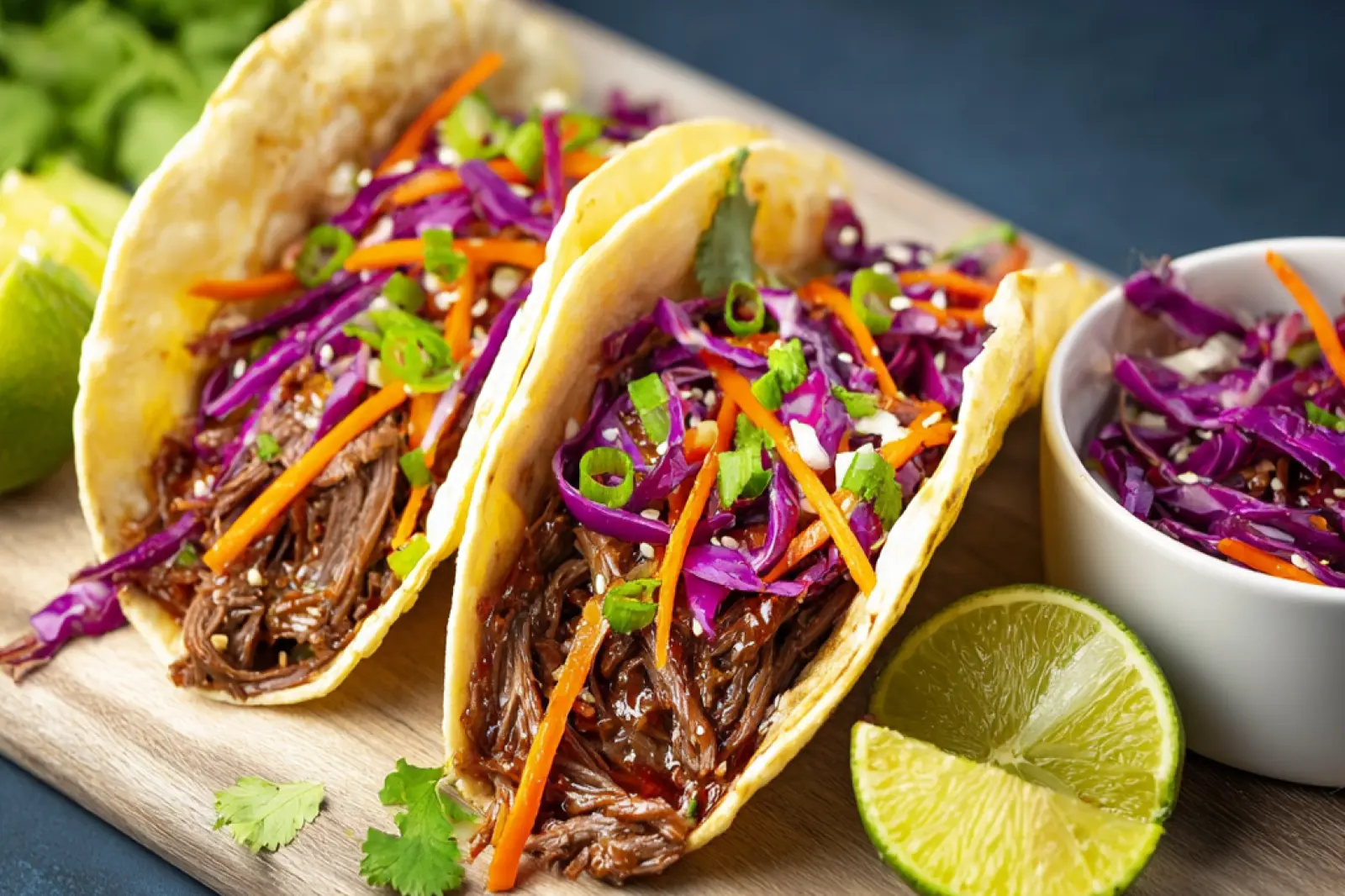

Bold, sticky, fall-apart beef tucked into warm tortillas with a kick of heat Slow Cooker Korean Gochujang Beef Tacos are the kind of dinner that makes everyone stop and ask what’s in it.
Last spring I started leaning hard on this one during those tired Tuesday evenings when decision fatigue was real and takeout felt like giving up. I’d tested a dozen ratios of gochujang to soy before landing on the right balance enough heat to feel exciting, not enough to scare the table. Dump it in, walk away, done.
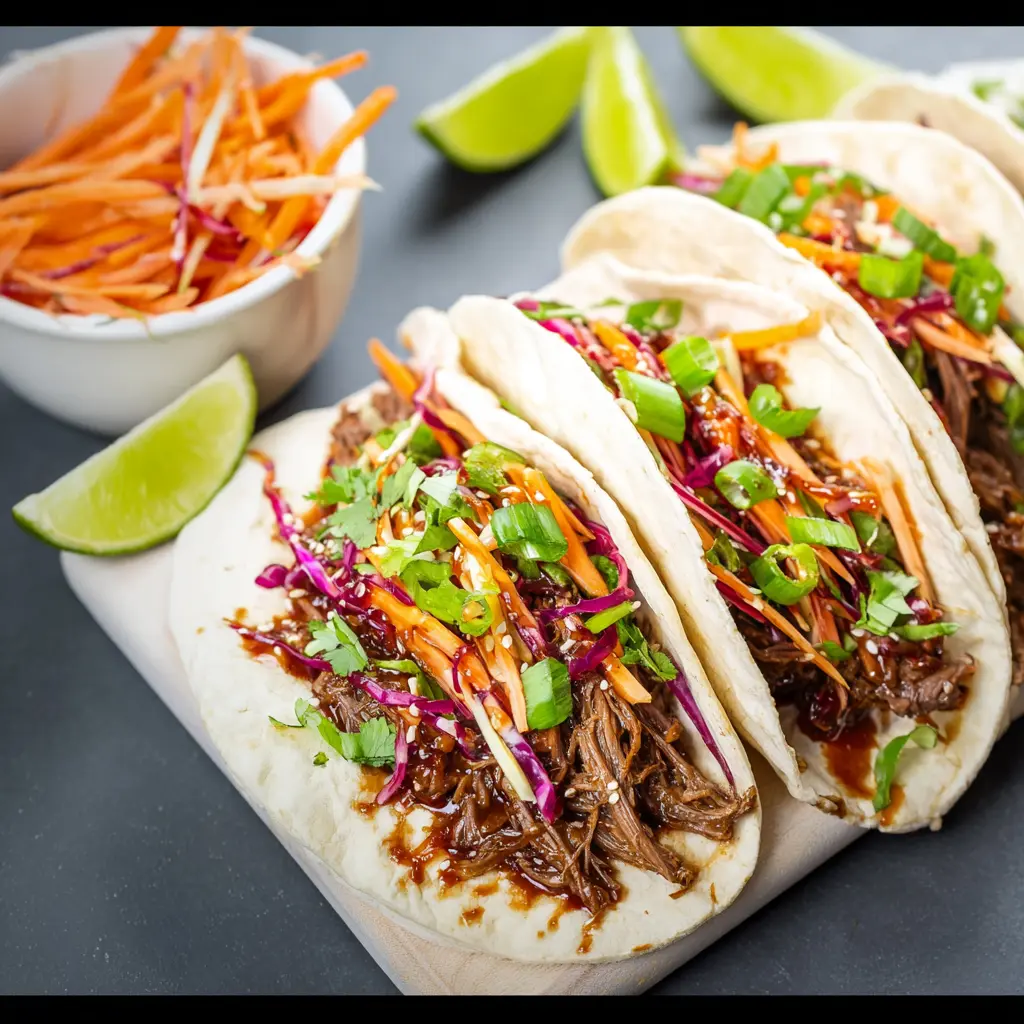
Slow Cooker Korean Gochujang Beef Tacos Your Family Will Love
Ingredients
Notes
- The goal in searing the beef is not to fully cook it–just to form a thin crust. The beef is done when it is tender and easily pulls apart with a fork. The BBQ sauce is best if made 1-2 days before use, but making it ahead isn’t absolutely necessary. Our kimchi makes a great side dish for a complete meal.
Why You’ll Love This
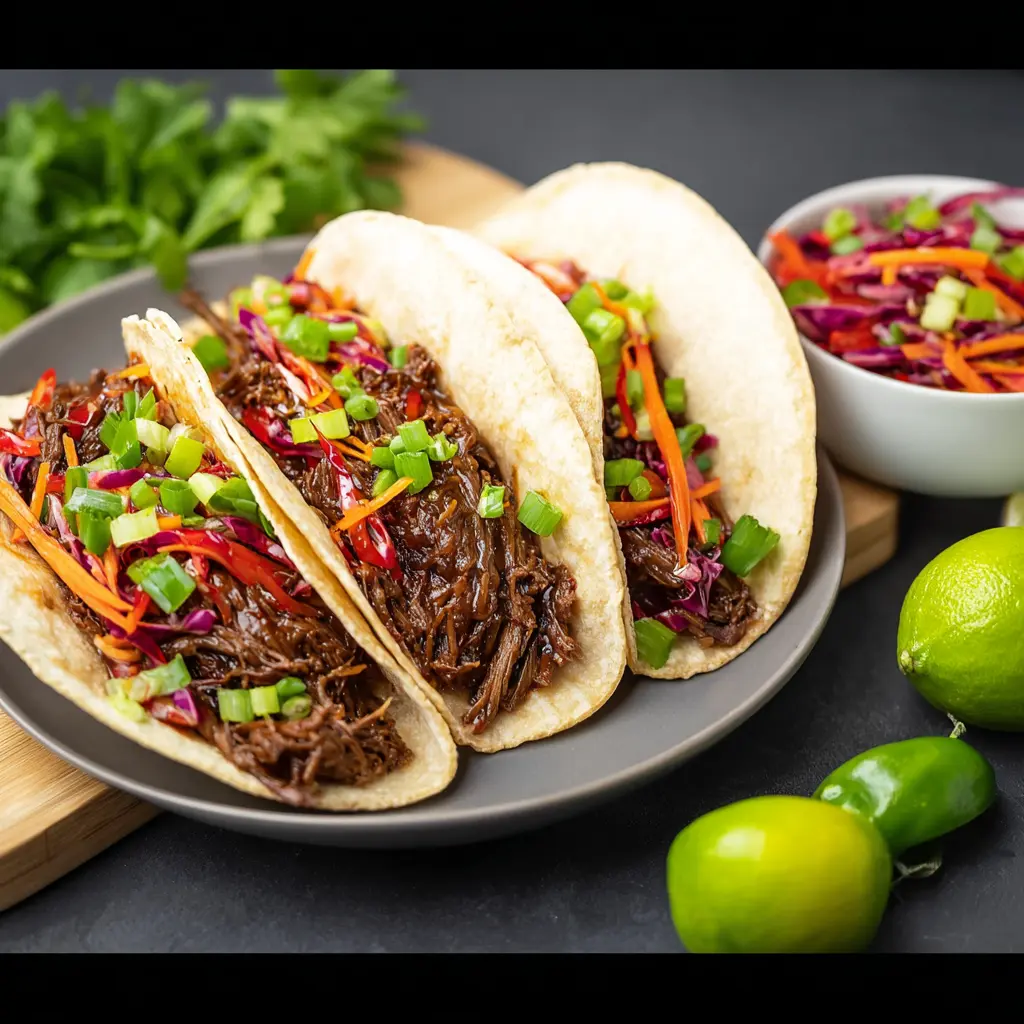
Here’s the honest truth on a tired Tuesday when the last thing you want to do is stand over a stove, this recipe saves dinner. Low effort, minimal cleanup, and the flavors feel exciting without being heavy. It’s the kind of meal that makes spring weeknights feel manageable again.
- The chuck roast slow-cooks all day and pulls apart with almost no effort
- Everything comes together in one pot searing included before you walk away
- Bold Korean-inspired flavors that still feel totally family-friendly
What Goes Into These Tacos
The ingredient list looks long at first, but most of it is pantry-friendly and easy to find at Walmart or Aldi. There are three components the beef, the gochujang BBQ sauce, and the Asian slaw and each one pulls its weight.
- Chuck roast the cut that gets better the longer it cooks; don’t swap it out if you can help it
- Gochujang a fermented Korean chili paste found in most international aisles; it’s the bold backbone of the BBQ sauce
- Soy sauce and sesame oil used in both the beef and the sauce for layered, savory depth
- Rice vinegar adds brightness to both the sauce and the slaw dressing
- Dark brown sugar balances the heat and gives the beef that sticky, glossy finish
How to Make Slow Cooker Korean Gochujang Beef Tacos
Don’t skip the sear it only takes a few minutes and builds a flavor base the slow cooker can’t create on its own. After that, the crockpot does everything.
- Sear the chuck roast on all sides in a hot skillet until a crust forms, then transfer to the slow cooker.
- In the same pan, cook the diced onion, minced garlic, and minced ginger for 2–3 minutes, then deglaze with soy sauce and rice vinegar. Pour it all over the beef.
- Add the dark brown sugar, sliced scallions, and crushed red pepper flakes. Cook on low for 6–8 hours.
- Pull the beef apart with forks, return it to the slow cooker, and let it cook uncovered for 30 more minutes to soak up the sauce.
- Whisk together the gochujang BBQ sauce ingredients and set aside. Toss the slaw vegetables in the dressing right before serving.
- Load the pulled beef into flour tortillas and top with BBQ sauce and Asian slaw.
Pro Tip: After years of testing slow cooker beef, Yesica always recommends making the gochujang BBQ sauce a day ahead the flavor deepens overnight and it takes one more task off your plate on serving day.
Can You Make These Tacos Ahead of Time?
Yes, and it actually makes things easier. The beef holds beautifully in the slow cooker on the warm setting, and the slaw can be dressed up to a few hours before serving.
- The gochujang BBQ sauce keeps well for 1–2 days in the fridge make it first
- Pulled beef can be stored in an airtight container for up to 4 days
- Dress the slaw close to serving so the cabbage stays crisp
Easy Swaps and Adjustments
The recipe is flexible. A few simple adjustments can make it work for different households without losing what makes it great.
- Flour tortillas can be swapped for corn tortillas if that’s what your family prefers
- Sriracha in the slaw is listed as optional skip it entirely for a milder version
- Canola oil in the slaw dressing can be replaced with any neutral oil you have on hand
- Red pepper flakes can be reduced if the table runs sensitive to heat
FAQs ( Slow Cooker Korean Gochujang Beef Tacos )
What is gochujang and where do I buy it?
Gochujang is a Korean fermented chili paste with a deep, savory heat – find it in the international aisle of most US grocery stores or at any Asian market.
What cut of beef is best for slow cooker Korean tacos?
Chuck roast is the best choice – its fat content breaks down during the long cook, giving you tender, easily pulled beef for this dish.
How long does gochujang beef cook in the crockpot?
Cook the beef on low for 6-8 hours, then shred it and return it to the slow cooker uncovered for an additional 30 minutes.
What toppings go on Korean beef tacos?
This recipe tops the pulled beef with gochujang BBQ sauce and a fresh Asian slaw made with cabbage, carrots, scallions, and cilantro.
Can I make slow cooker Korean beef tacos not spicy?
Yes – simply omit the Sriracha from the slaw and reduce or skip the crushed red pepper flakes in the beef to make this meal mild.
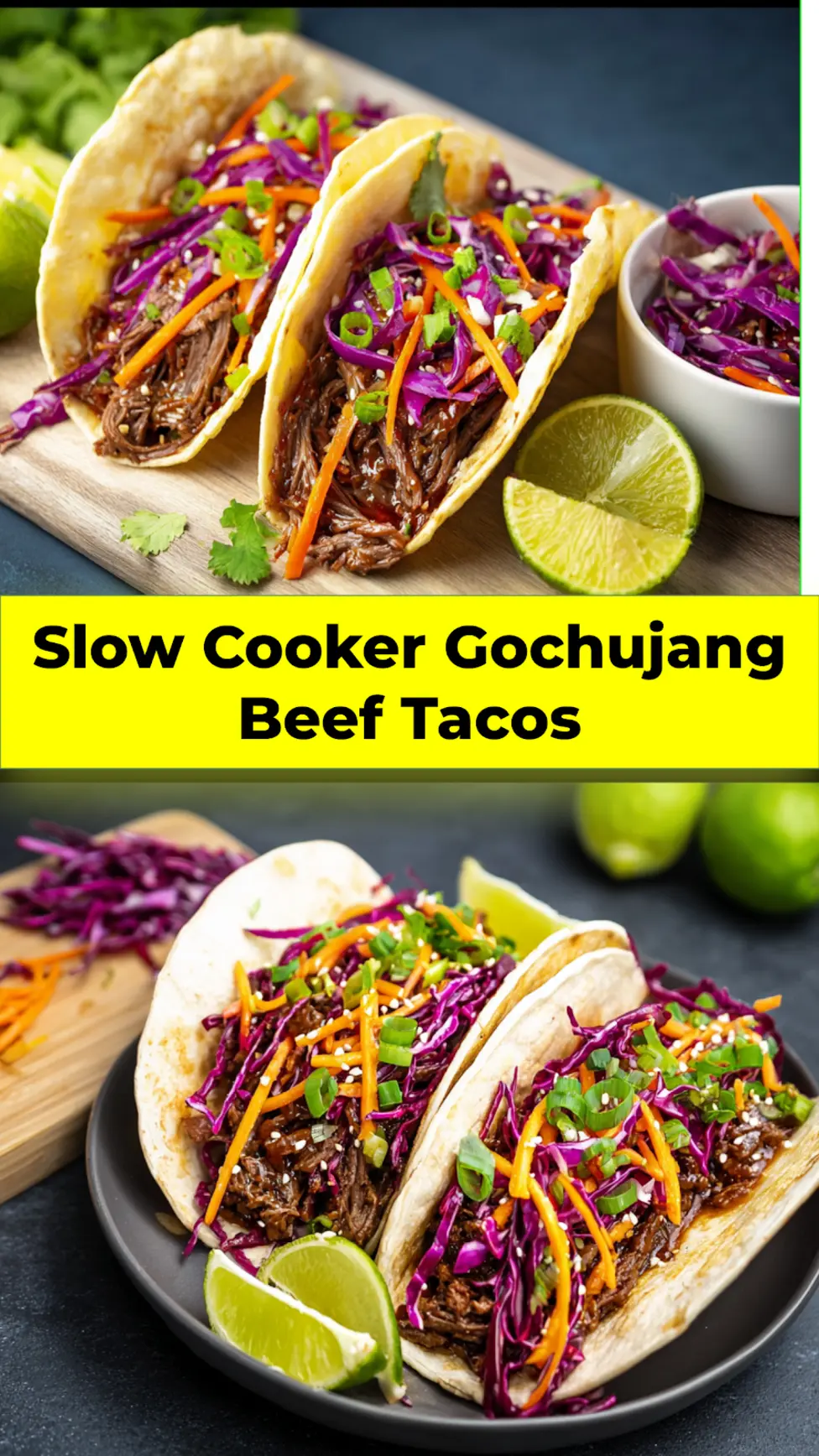
These Slow Cooker Korean Gochujang Beef Tacos are everything a weeknight dinner should be low effort, big payoff, and the kind of fall-apart beef that fills the whole kitchen with something wonderful. They turn out beautifully every single time.
One thing worth repeating: make the gochujang BBQ sauce the night before. It genuinely gets better overnight, and it’s one less thing standing between you and a relaxed dinner. If your crew runs a little heat-sensitive, just dial back the red pepper flakes the depth of flavor from the gochujang and dark brown sugar still comes through beautifully. Leftovers reheat wonderfully too, so tuck the pulled beef in an airtight container and you’ve already got tomorrow handled.
If you try these, I’d love to hear how your table reacted did anyone guess what was in the sauce? Drop a comment below or tag us in your taco night photos. And if you’ve got a friend who’s always scrambling for a good weeknight dinner idea, this one is absolutely worth sharing. Here’s to dinners that help you get back into a rhythm.