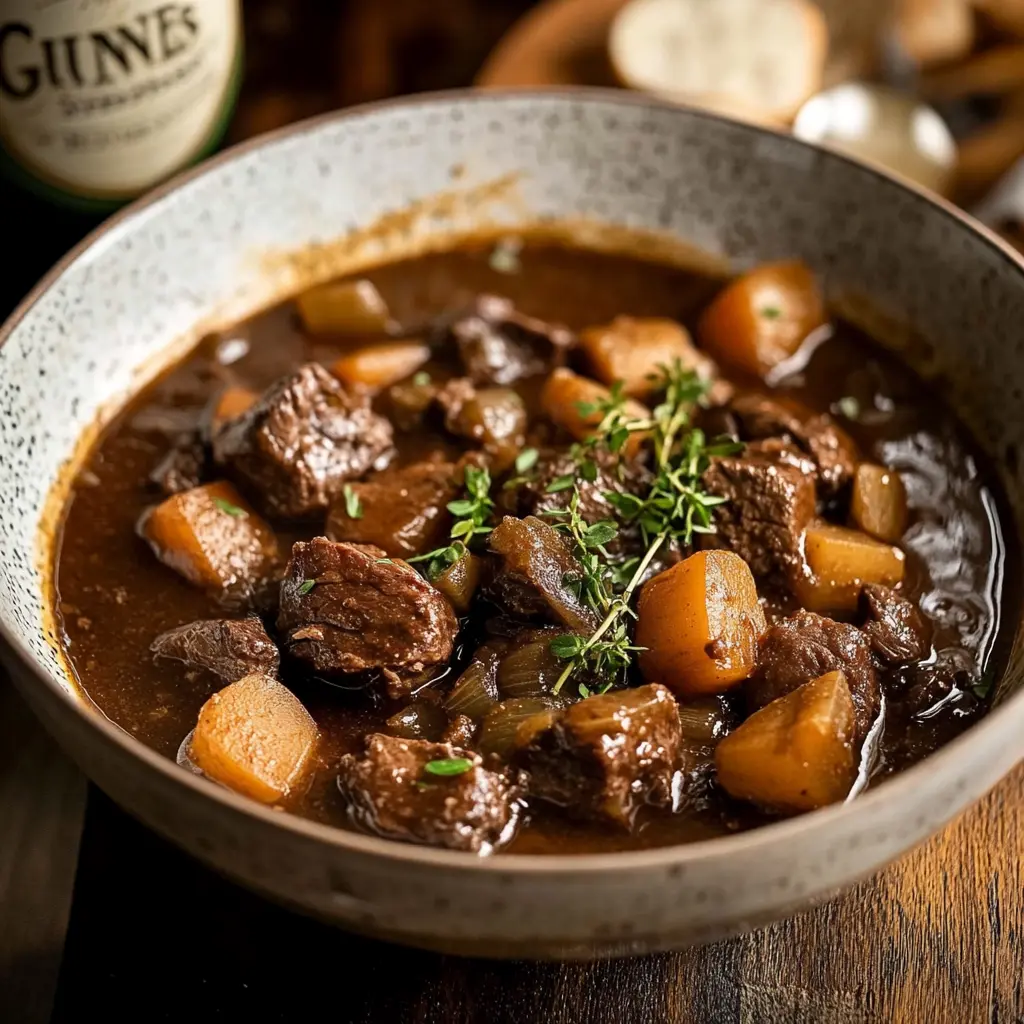
There’s something about the sound of beef sizzling in a heavy pot on a cold afternoon that just feels right. This Irish Beef and Guinness Stew fills your kitchen with the kind of rich, malty smell that makes everyone wander in asking when dinner’s ready. It’s been showing up at tables for generations because it turns simple ingredients into something that tastes like you’ve been cooking all day.
Think fork-tender beef in a silky, dark gravy that’s got depth from the Guinness and sweetness from caramelized onions and carrots. The stout melts right into the broth, not boozy at all, just earthy and warm. It comes together in one pot, uses pantry staples you probably already have, and gets better if you make it a day ahead. Serve it with crusty bread for soaking up every last bit.
Started shooting stew recipes back in 2016 when I was documenting my uncle’s pub kitchen in Boston. He taught me to sear the beef hard and fast before anything else goes inthat’s where the flavor lives. I’ve photographed this dish probably twenty times since then, and it always looks better after a long simmer when the sauce goes glossy. My family requests it every March without fail.
Thomas Baker
Irish Beef and Guinness Stew Recipe Easy and Delicious
This Irish Beef and Guinness Stew is a hearty and flavorful classic that brings rich, slow-cooked beef together with the deep, complex notes of Guinness beer. Perfect for a cozy dinner, this stew delivers tender meat and a luscious sauce that’s genuinely satisfying and authentically Irish.
3 carrots peeled and cut into 1.25 cm / 1/2″ thick pieces
2 large celery stalks cut into 2cm / 1″ pieces
2 bay leaves
3 sprigs thyme (or sub with 1 tsp dried thyme leaves)
Method
Cut the beef into 5cm (2 inch) pieces and pat them dry before seasoning with salt and black pepper.
Warm the olive oil in a heavy pot over high heat, then brown the beef pieces well on all sides in batches. Set aside browned meat.
Lower the heat to medium and add more oil if the pot seems dry.
Sauté the minced garlic and chopped onions for about 3 minutes until they begin to soften, then add the diced bacon.
Cook until the bacon is nicely browned, then add the chopped carrots and celery, stirring to combine.
Sprinkle the flour over the vegetables and stir continuously for 1 minute to cook off the raw flour taste.
Pour in the Guinness beer, chicken stock, and tomato paste, stirring well to dissolve the flour and blend the sauce.
Add the bay leaves and thyme sprigs, return the browned beef and any juices back to the pot, ensuring the liquid just covers the ingredients.
Cover the pot, reduce the heat to a gentle simmer, and cook for 2 hours until the beef is tender.
Remove the lid and simmer uncovered for an additional 30 to 45 minutes until the beef easily breaks apart and the sauce thickens.
Skim excess fat from the surface if you wish, then taste and adjust salt and pepper as needed.
Take out the bay leaves and thyme sprigs before serving.
Enjoy the stew alongside creamy mashed potatoes for a delicious comforting meal.
Notes
Guinness beer is the key to the stew’s rich flavor and cannot be fully substituted. For a non-alcoholic alternative, replace Guinness with 2 cups water plus 1 tbsp Worcestershire sauce and 2 crumbled beef bouillon cubes. You can also cook this stew in the oven, slow cooker, or pressure cooker following the adapted methods in the recipe source. Flour is used to thicken the sauce but is never dusted onto the beef before browning to avoid burning flavors. Chicken broth is preferred to let the Guinness flavor shine, though beef broth works well too. Nutrition info excludes mashed potatoes and may be slightly overstated because it does not account for fat skimmed off.
Why You’ll Love This Irish Beef and Guinness Stew
This is the kind of stew that fills your kitchen with the smell of something really good happening. The beef gets so tender it practically melts when you press it with a fork, and that saucedark, glossy, just the right amount of thickhas this depth you don’t get from a regular beef stew. The Guinness isn’t there to taste like beer; it melts into everything and creates this rich, slightly sweet backdrop that makes you want to sop up every drop with bread or mashed potatoes.
It’s also forgiving. You can walk away while it simmers, check on it between errands, and it won’t punish you if you go a little longer. The ingredient list is short and straightforwardno hunting down anything fancy. And if you make it a day ahead, it tastes even better when the flavors have had time to settle in together overnight.
One pot, minimal cleanup: Everything happens in the same heavy pot, so you’re not juggling multiple pans.
Tender, fall-apart beef: Slow cooking transforms tough cuts into something you can cut with a spoon.
Rich, complex flavor: The Guinness adds layers without tasting boozyit just makes everything taste more like itself.
Make-ahead friendly: This stew reheats beautifully and actually improves after a night in the fridge.
The Ingredients That Make It Work
The magic here starts with beef chuckit’s got enough marbling to stay juicy through a long simmer, and it doesn’t dry out like leaner cuts would. You’ll brown it in olive oil to get that caramelized crust that adds so much flavor to the finished sauce. Bacon (or speck or pancetta) brings a smoky, salty punch that balances the sweetness from the onions and carrots.
The Guinness is what gives this stew its personality. It’s a dark Irish stout with a malty, slightly bitter edge that mellows completely as it cooks down. You won’t taste “beer” in the final dishit just creates this velvety, complex base that regular broth can’t match. The tomato paste adds a little tang and helps thicken the sauce, while the chicken broth keeps things from getting too heavy. Bay leaves and thyme round it all out with that earthy, herbal note.
Pro Tip: If your pot looks dry after browning the beef, add a little more olive oil before you cook the garlic and onions. You want them to soften and caramelize, not scorch.
Ingredient
Role in the Stew
Swap Ideas
Beef chuck
Becomes tender and rich during slow cooking
Boneless short rib, any slow-cooking beef cut
Guinness Beer
Creates deep, malty flavor base
2 cups water + 1 tbsp Worcestershire + 2 beef bouillon cubes (not traditional, but works)
Bacon
Adds smoky, salty depth
Speck or pancetta
Chicken broth
Milder base that lets Guinness shine
Beef broth (richer, still delicious)
Flour
Thickens the sauce
Gluten-free flour blend
How to Build the Stew Step by Step
Start by cutting your beef into big 2-inch chunks and patting them dry with a paper towelthis helps them get a good sear instead of steaming. Sprinkle them with salt and black pepper, then heat your olive oil in a heavy pot over high heat. Brown the beef in batches so the pieces aren’t crowded. You want a deep golden crust on all sides. Don’t rush this part; it’s where a lot of the flavor comes from.
Once all the beef is browned and set aside, lower the heat to medium and add your minced garlic and chopped onions. Let them cook for about three minutes until they start to soften and smell sweet. Then add the diced bacon and let it brown up. The fat from the bacon will coat everything and add another layer of richness. Stir in the carrots and celery so they get coated in all that flavorful fat.
Now sprinkle the flour over everything and stir it around for a full minute. This cooks off the raw flour taste and gets it ready to thicken the sauce. Pour in the Guinness, chicken broth, and tomato paste, and mix everything really well so the flour dissolves and there are no lumps. Drop in the bay leaves and thyme sprigs, then return the beef and any juices back to the pot. The liquid should just barely cover the beef.
Cover the pot, lower the heat so it’s bubbling gently, and let it simmer for two hours. After that, take the lid off and let it cook for another 30 to 45 minutes. The sauce will reduce and thicken, and the beef should be so tender it falls apart when you touch it. Skim off any fat that’s pooled on the surface, taste for seasoning, and pull out the bay leaves and thyme stems before serving.
Timing, Temperature, and Technique
The key to a great stew is patience. You’re not rushing the beef to tendernessyou’re coaxing it there slowly. The two-hour covered simmer breaks down the connective tissue in the chuck, and the final 30 to 45 minutes uncovered concentrates the sauce without drying out the meat. If you’re using the oven instead, cover and bake at 320°F for two and a half hours, then uncover for that final reduction.
For slow cooker fans, reduce the chicken broth by a cup and bring everything to a simmer on the stove first. Scrape up all the browned bits from the bottom of the pot before transferring to the slow cooker, then cook on low for eight hours. If the sauce needs thickening, ladle some into a saucepan and simmer it down on the stove, or use your slow cooker’s uncovered simmer function if it has one.
Cooking Method
Time
Key Notes
Stovetop (covered)
2 hours, then 30–45 min uncovered
Gentle bubbling, not a rolling boil
Oven
2.5 hours covered at 320°F, then 30–45 min uncovered
Even heat, great if you want to walk away
Slow Cooker
8 hours on low
Reduce broth by 1 cup; simmer on stove first to deglaze
Pressure Cooker
40 minutes on high
Longer than usual because chuck needs time to tenderize
Tweaks, Swaps, and Substitutions
If you can’t use Guinness, the recipe gives you a workaround: two cups of water plus a tablespoon of Worcestershire sauce and two crumbled beef bouillon cubes. It won’t be traditional Irish stew anymore, but it’ll still be a really good beef stew with plenty of flavor. The Worcestershire adds that umami depth, and the bouillon beefs up the broth.
For gluten-free cooking, swap the all-purpose flour with a gluten-free flour blend that measures one-to-one. The sauce will thicken just the same. If you prefer beef broth over chicken broth, go aheadit makes the stew richer and a little more robust, though the Guinness flavor will be slightly less front and center. Either way works beautifully.
Note: Some recipes call for dusting the beef in flour before browning, but that can burn and leave a bitter taste throughout the stew. Stirring the flour in after the vegetables cook gives you the thickening power without the risk.
Serving and Storage Tips
This stew was born to be served over creamy mashed potatoes. The potatoes soak up the sauce, and every bite is rich and comforting. You can also serve it with crusty bread, buttered egg noodles, or even polenta if you want to switch things up. A simple green salad on the side cuts through the richness and makes it feel like a full, balanced meal.
Leftovers keep in the fridge for up to four days in an airtight container. In fact, they get betterthe flavors deepen and meld together overnight. Reheat gently on the stove over medium-low heat, adding a splash of broth or water if the sauce has thickened too much. You can also freeze portions for up to three months. Thaw in the fridge overnight and reheat slowly on the stove.
Storage Method
How Long
Best Practice
Refrigerator
Up to 4 days
Store in airtight container; reheat gently with a splash of broth
Freezer
Up to 3 months
Portion into freezer-safe containers; thaw overnight in fridge
Reheating
Stovetop preferred
Low and slow; stir occasionally to prevent sticking
What to Expect When You Make It
Your kitchen is going to smell incrediblelike a cozy pub in the Irish countryside. The beef will release its juices as it simmers, and the Guinness will mellow into something warm and almost sweet. The vegetables soften but hold their shape, and the sauce turns glossy and thick enough to coat the back of a spoon. By the time it’s done, the beef should fall apart with just a little pressure from your fork.
The first time I photographed this recipe, I had to stop myself from eating half the pot before I got the final shots. The sauce clings to everything in the best way, and the carrots pick up all that rich, savory flavor. It’s the kind of dish that makes people sit down at the table without needing to be asked twice.
Pro Tip: If your sauce seems thin after the final simmer, ladle out a cup of it into a small saucepan and reduce it on the stove over medium-high heat until it thickens, then stir it back into the pot. This concentrates the flavor without overcooking the beef.
Expert Says
The dark beer in Irish Beef and Guinness Stew isn’t just for flavorits acidity and enzymes help break down tough collagen in beef chuck, creating that melt-in-your-mouth texture. The long, slow simmer transforms connective tissue into rich gelatin, which naturally thickens the gravy and adds body to every spoonful.
For more delicious recipes and cooking inspiration, follow me on Facebook, Pinterest and Reddit!
How I Finally Perfected My Irish Beef and Guinness Stew
I must have tested this Irish Beef and Guinness Stew a dozen times before getting the balance right. The first batch was too bitter, the second too thin. Through trial and error, I learned that browning the beef properly and letting everything simmer low and slow makes all the difference in achieving that rich, velvety texture.
FAQs ( Irish Beef and Guinness Stew )
Can I use a different beer instead of Guinness?
Yes, you can substitute with another dark stout or porter for similar depth. Avoid light beers as they won’t provide the rich, malty flavor this recipe needs. The darker and more robust the beer, the better the final taste will be.
What cut of beef works best for this stew?
Chuck roast is ideal because it becomes incredibly tender after slow cooking and has enough marbling to stay moist. Cut it into 1.5 to 2-inch cubes for the best texture. Avoid lean cuts like sirloin, as they can dry out during the long cooking time.
How long does this dish need to cook?
Plan for about 2.5 to 3 hours on the stovetop or in the oven at 325°F until the beef is fork-tender. You can also use a slow cooker on low for 6-8 hours. The longer, slower cook really develops the flavors and breaks down the meat beautifully.
Can I make this meal ahead of time?
Absolutely – this stew actually tastes better the next day after the flavors have had time to meld together. Store it in the fridge for up to 3 days or freeze for up to 3 months. Just reheat gently on the stovetop, adding a splash of broth if needed.
Should I brown the meat before adding it to the pot?
Yes, searing the beef cubes in batches creates a flavorful crust and adds depth to the gravy. Don’t overcrowd the pan or the meat will steam instead of brown. This extra step takes about 10 minutes but makes a noticeable difference in the final dish.
Conclusion
You’ll love how this Irish Beef and Guinness Stew turns out after that slow simmerthe beef practically falls apart, and the sauce clings to everything with this gorgeous, glossy shine. It takes a little time, but most of that is hands-off, and the payoff is a pot full of something that smells like the coziest corner of an Irish pub. The kind of dish that makes everyone linger at the table a little longer.
If you’ve got leftovers, they’re even better the next day once everything’s had a chance to meld together overnight. Try serving it over mashed potatoes one night and with crusty sourdough the nextit’s just as good both ways. A food stylist I worked with years ago taught me to skim the fat right before plating; it makes the sauce photograph beautifully and taste cleaner, too.
I’d love to see how yours turns outtag me if you snap a photo, or let me know if this stew brings back any memories from your own family’s kitchen. Maybe save this one for the next chilly evening when you want something hearty and homemade. Your people are going to be so glad you made it.
With a passion for wholesome cooking inspired by family traditions, I create healthy, simple recipes focused on sourdough, shrimp, chicken, and balanced meals for everyday wellness.
Every recipe here is tested in my kitchen using U.S. measurements and easy-to-find ingredients, so you can cook confidently.
Thank you for joining this cozy community where nutritious and delicious meals come together.