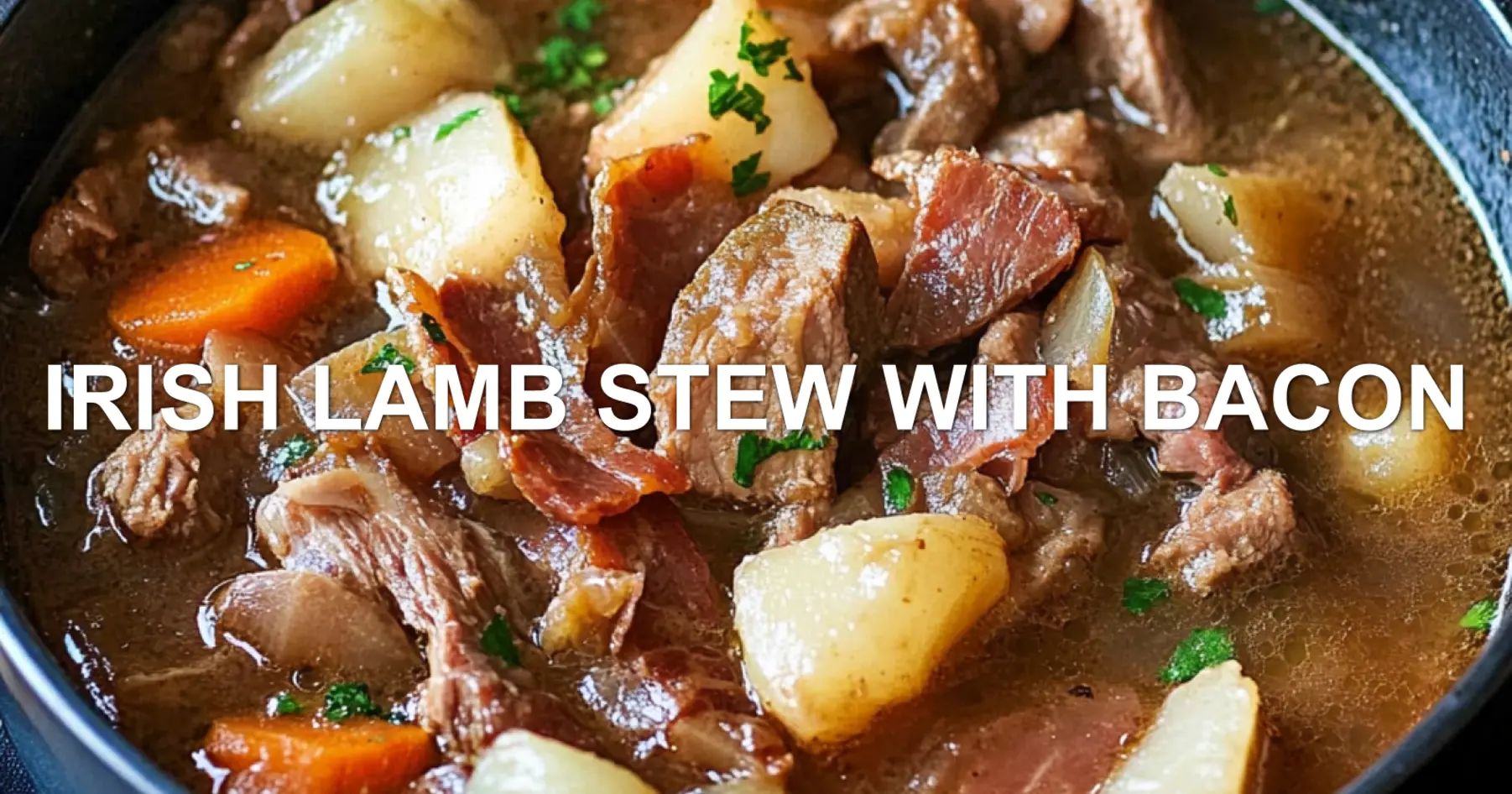
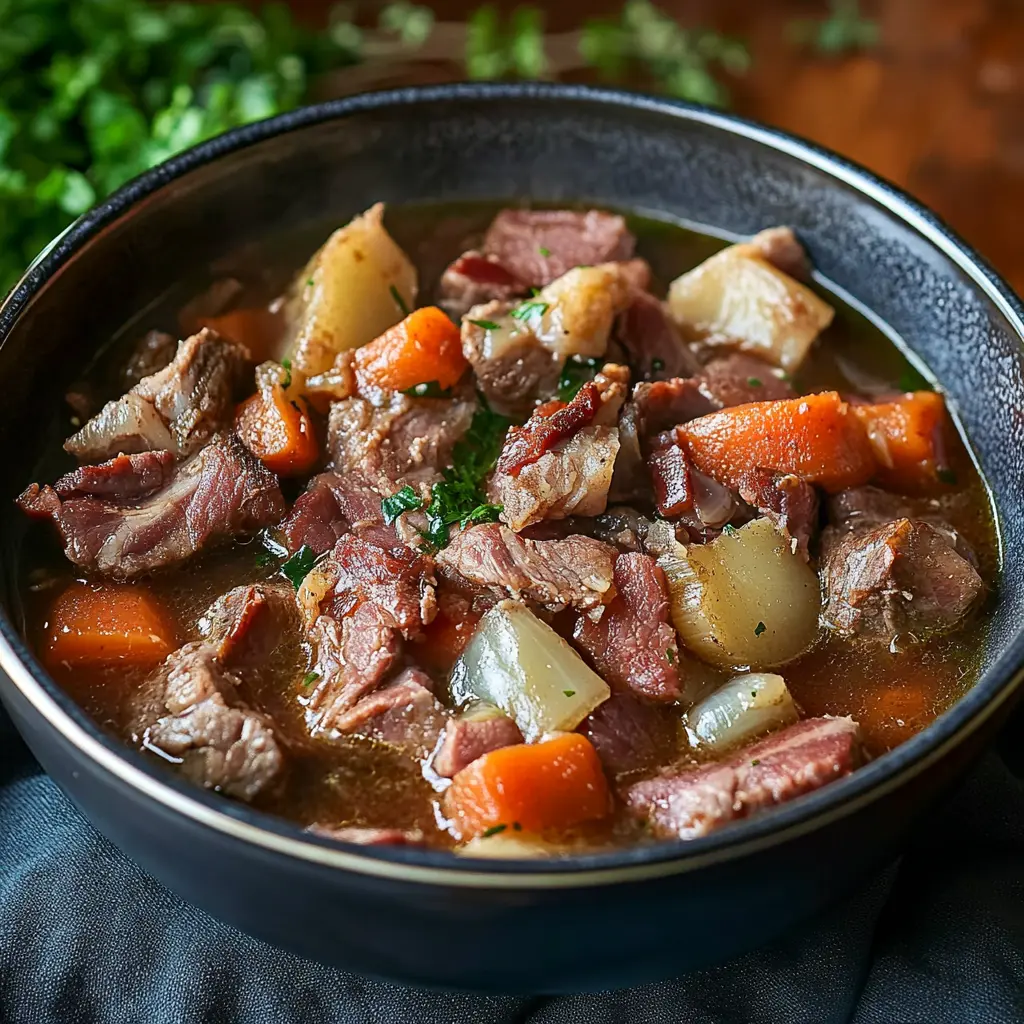
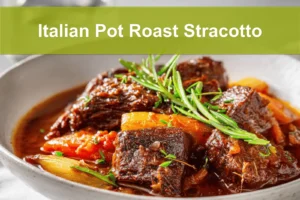
There’s something about the smell of lamb browning in a heavy pot on a rainy afternoon. This Irish Lamb Stew with Bacon is the kind of meal that makes your whole house smell like home, and it’s been warming up kitchens for generations because nothing beats tender meat and smoky bacon in one bowl.
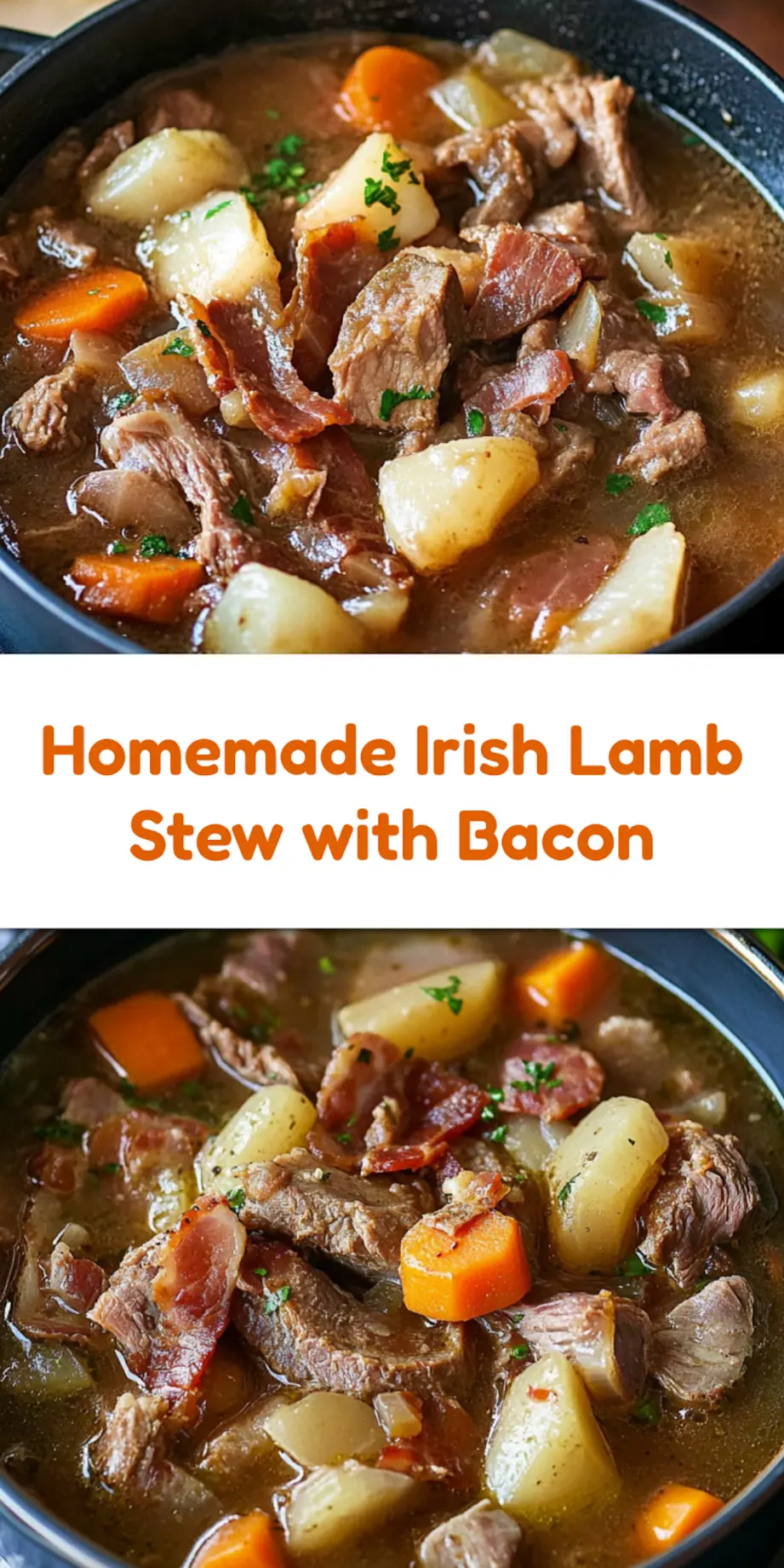
Think fall-apart lamb, crispy bacon bits, and soft chunks of potato and carrot all swimming in a rich, herby broth. It comes together in one potno fancy techniques, just good browning and slow simmering. You get all that deep, savory flavor without standing over the stove, and it actually tastes better the next day.
Started making this back in 2015 after a trip to County Cork where I tasted the real thing in a tiny pub kitchen. The chef there told me the secret was browning the bacon first, then using that fat to sear the lamb. I’ve been doing it that way ever since, and my family requests it every March like clockwork.
Olivia Farnsworth
Irish Lamb Stew with Bacon Recipe Easy Cozy Comfort
This hearty Irish Lamb Stew with Bacon brings together tender bone-in lamb, smoky bacon, and a medley of vegetables for a cozy and comforting meal. Perfect for chilly days, this stew offers rich flavors with the wholesome goodness of barley and turnips, making it a satisfying dish for family gatherings.
2 large carrots peeled and cut into 2-inch segments
1 turnip peeled and cut into 1-inch pieces
2 heaping tablespoons pearl barley (omit for gluten-free version)
1 teaspoon chopped fresh thyme or 1 teaspoon dried thyme
Kosher salt and freshly ground black pepper
1 quart water or lamb stock warmed
Method
Place a large Dutch oven over medium heat and lay the bacon slices flat to slowly cook until their fat renders and the edges turn golden. Remove the bacon to drain on paper towels, then chop and set aside.
Keep just two tablespoons of the bacon fat in the pan and raise the heat to medium-high. In batches, sear the lamb pieces until each side is beautifully browned without stirring too often to ensure a good crust.
Layer the browned lamb at the bottom of the pot, then add a layer of potatoes, onions, turnips, carrots, and sprinkle chopped bacon on top. Repeat with another lamb layer followed by the remaining vegetables. Stir in the pearl barley, thyme, salt, and black pepper evenly over the layers.
Pour the warmed water or lamb stock over everything and bring to a gentle boil. Lower the heat to a very light simmer, cover the pot partially with the lid, and cook for 1 1/2 to 2 hours until the lamb is tender and starts to fall off the bones.
Skim off any fat that rises to the surface. Carefully pick out the bones using tongs, then season the stew with additional salt and pepper to taste before serving.
Notes
Cooking the lamb bone-in adds extra depth to the stew’s flavor. If preferred, debone the meat before serving. Using turnips balances the richness of the lamb and bacon perfectly. Yukon gold potatoes hold their shape well, but Russet potatoes can be used if a thicker stew is desired. For a gluten-free option, omit the barley. Leftovers keep well refrigerated for up to three days and taste even better the next day.
Why You’ll Love This Irish Lamb Stew with Bacon
This is the kind of meal that makes you feel like you’ve got your life together, even if the laundry’s piled up and you haven’t answered emails in three days. You brown some meat, layer everything in one pot, and walk away while it does all the work. Two hours later, you’ve got fall-apart lamb swimming in the most incredible broth.
One-pot wonder: Everything cooks together in your Dutch oven, so cleanup is basically nonexistent.
Deep, smoky flavor: Browning the bacon first and using that fat to sear the lamb creates layers of flavor you just can’t fake.
Better the next day: Like most stews, this one gets even richer and more delicious after sitting overnight in the fridge.
Comfort that feels nourishing: It’s hearty and satisfying, but packed with vegetables and real, wholesome ingredients that leave you feeling good.
What You’ll Need (Ingredients & Tools)
The ingredient list here is beautifully simplenothing you can’t find at your regular grocery store. You’ll want a good heavy Dutch oven for this one, something that holds heat evenly and can go from stovetop to a long, gentle simmer without any hot spots.
The star players: lamb shoulder or shoulder blade chops (bone-in is key for flavor), thick-cut bacon, Yukon gold potatoes, onions, carrots, turnip, and pearl barley. Fresh thyme if you’ve got it, dried works just fine too. The turnip might feel unfamiliar, but it adds this earthy balance that makes the whole stew sing.
Pro Tip: If you can’t find lamb stock, don’t stress. Just use water and keep those bones in while it cooksthey’ll give you all the rich, meaty flavor you need.
How This Stew Comes Together
The magic starts with rendering out the bacon fat slowly, so you get crispy bacon and a flavorful base all at once. Then you use that golden fat to brown the lamb in batchesdon’t rush this part. Good browning means deep flavor, and it’s worth the extra few minutes.
Once your meat’s browned, you layer everything in the pot like you’re building a cozy edible blanket: lamb, then vegetables and bacon, then more lamb, more vegetables. Tuck in the barley and thyme, season with salt and pepper, then pour in your warm water or stock. Bring it to a boil, drop it to a bare simmer, and let it go for about two hours with the lid just slightly cracked.
Step
Time
What’s Happening
Cook bacon
8–10 minutes
Rendering fat, browning gently
Brown lamb
10–12 minutes
Building deep flavor in batches
Layer & simmer
1½–2 hours
Lamb becomes fork-tender, flavors meld
Skim & season
5 minutes
Remove bones, adjust salt and pepper
When the lamb is so tender it’s falling off the bone, skim any fat from the surface, pull out the bones with tongs, and taste for seasoning. This is where you make it yoursadd more salt, more pepper, whatever it needs.
Ingredient Swaps and Tweaks
This stew is forgiving, which is one of the reasons it’s been made for generations. You can swap and adjust based on what you’ve got in the pantry or what your family likes.
Ingredient
Swap or Variation
Notes
Yukon gold potatoes
Russet potatoes
They’ll break down more and thicken the stew
Pearl barley
Omit or add more
Leave it out for gluten-free; add more for thicker stew
Water
Lamb stock
Stock adds richness, but water works great with bone-in lamb
Fresh thyme
Dried thyme
Use the same amount, dried works perfectly
Turnip
Extra carrots or parsnips
Turnip adds earthy balance, but you can skip if needed
Note: If you want a thicker stew, add another tablespoon of barley or use Russet potatoes that break down naturally as they cook. If you’re keeping it gluten-free, just leave the barley out entirelyit’ll still be hearty and delicious.
Serving and Storing Your Stew
Serve this straight from the pot into big, deep bowls. It’s the kind of meal that needs nothing more than a spoon and maybe some crusty bread on the side if you’re feeling fancy. The broth is rich enough to sip, and every bite has a little bit of everythinglamb, bacon, soft vegetables, and that subtle chew from the barley.
Storage: Let the stew cool completely, then transfer it to an airtight container. It’ll keep in the fridge for up to four days, and honestly, it tastes even better on day two when all those flavors have had time to settle in together. You can also freeze it for up to three monthsjust thaw overnight in the fridge and reheat gently on the stovetop.
Reheating tip: Add a splash of water or stock when you reheat, since the barley and potatoes will soak up some of the liquid as it sits. Warm it slowly over medium-low heat, stirring occasionally, until it’s heated through.
Troubleshooting Tips
If your lamb isn’t getting tender after two hours, just keep simmering. Some cuts need a little more time, and that’s totally normal. Make sure your heat is low enough that you’re seeing just a few bubbles breaking the surfaceanything more and the meat can toughen up instead of falling apart.
Stew too thin? Let it simmer uncovered for the last 15 minutes, or mash a few potato pieces against the side of the pot to thicken the broth naturally.
Too salty? Add a quartered potato and simmer for 10 minutesit’ll absorb some of the salt. Remove before serving.
Lamb not browning? Your pan might be too crowded. Work in smaller batches and give each piece space to get that deep golden crust.
Pro Tip: If you’re using water instead of stock, don’t skimp on the browning step and make sure to cook the lamb bone-in. Those bones release so much flavor into the broth, you won’t miss the store-bought stock at all.
Expert Says
Irish lamb stew with bacon benefits from a long, slow simmer that breaks down the collagen in the lamb shoulder into gelatin, creating a silky, rich broth. The bacon adds depth through the Maillard reaction, while root vegetables release natural starches that thicken the stew without flour. This traditional method maximizes flavor and tenderness.
For more delicious recipes and cooking inspiration, follow me on Facebook, Pinterest and Reddit!
How I Finally Perfected My Irish Lamb Stew with Bacon
This Irish Lamb Stew with Bacon took me nearly a year to get right. My first attempts were too watery, then too thick, until I learned to let the lamb brown slowly and the bacon release its smoky flavor into every spoonful. Now it’s the kind of stew that fills your kitchen with warmth and makes everyone gather around the table.
FAQs (Irish Lamb Stew with Bacon)
What cut of lamb works best for this stew?
Lamb shoulder is ideal because it has enough marbling to stay tender during slow cooking. Lamb neck is another excellent choice for its rich flavor and gelatinous texture. Avoid lean cuts like leg, as they can dry out during the long braising time.
Can I make this recipe in a slow cooker?
Yes, brown the meat and bacon first in a skillet for better flavor, then transfer everything to your slow cooker. Cook on low for 7-8 hours or high for 4-5 hours until the lamb is fork-tender. The results are just as delicious with minimal hands-on time.
Should I peel the potatoes before adding them?
That’s up to personal preference. Leaving the skins on adds rustic texture and extra nutrients, while peeled potatoes give a smoother, more traditional presentation. Either way, cut them into uniform chunks so they cook evenly with the other ingredients.
How do I thicken the broth if it’s too thin?
Mash a few potato pieces against the pot’s side and stir them back in – the starch naturally thickens the liquid. Alternatively, mix 2 tablespoons of flour with cold water to make a slurry, then stir it into the simmering stew for a few minutes until it reaches your desired consistency.
What type of bacon should I use?
Traditional Irish bacon (back bacon) is authentic, but standard American thick-cut bacon works beautifully too. Avoid thin-cut or maple-flavored varieties, as they can become too crispy or add unwanted sweetness. Cut the strips into 1-inch pieces before cooking for the best distribution throughout the dish.
Conclusion
This Irish Lamb Stew with Bacon takes about two and a half hours from start to finish, but most of that is hands-off simmering while you go about your day. You’ll love how the lamb just falls apart and how every spoonful tastes rich, smoky, and deeply satisfying without any fuss.
If you want to stretch it further, toss in extra carrots or potatoes halfway through. A splash of Worcestershire sauce at the end adds unexpected depth. Leftovers reheat beautifully on the stovetop with a little added broth, and I’ve even frozen portions in individual containers for those nights when cooking feels impossible.
I’d love to hear if this becomes a regular in your kitchen, especially if you tweak it to make it your own. Did your family grow up with stews like this, or is this your first time trying lamb? Save this one for someone who needs a little comfort this weekit’s the kind of recipe that feels like a warm hug in a bowl.
With a passion for wholesome cooking inspired by family traditions, I create healthy, simple recipes focused on sourdough, shrimp, chicken, and balanced meals for everyday wellness.
Every recipe here is tested in my kitchen using U.S. measurements and easy-to-find ingredients, so you can cook confidently.
Thank you for joining this cozy community where nutritious and delicious meals come together.