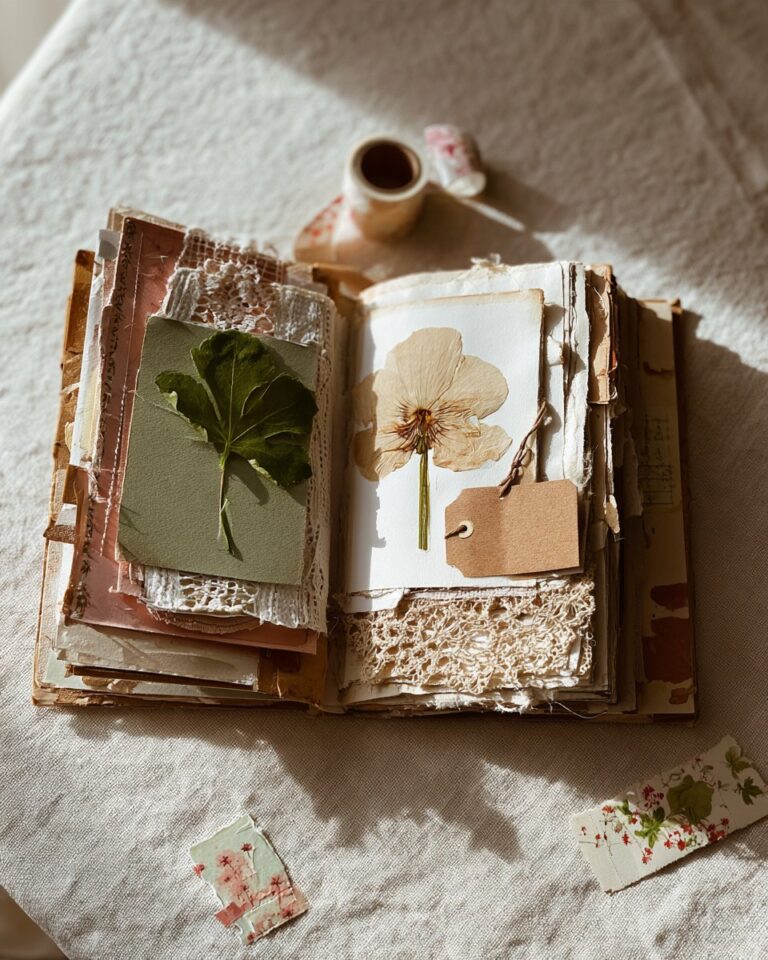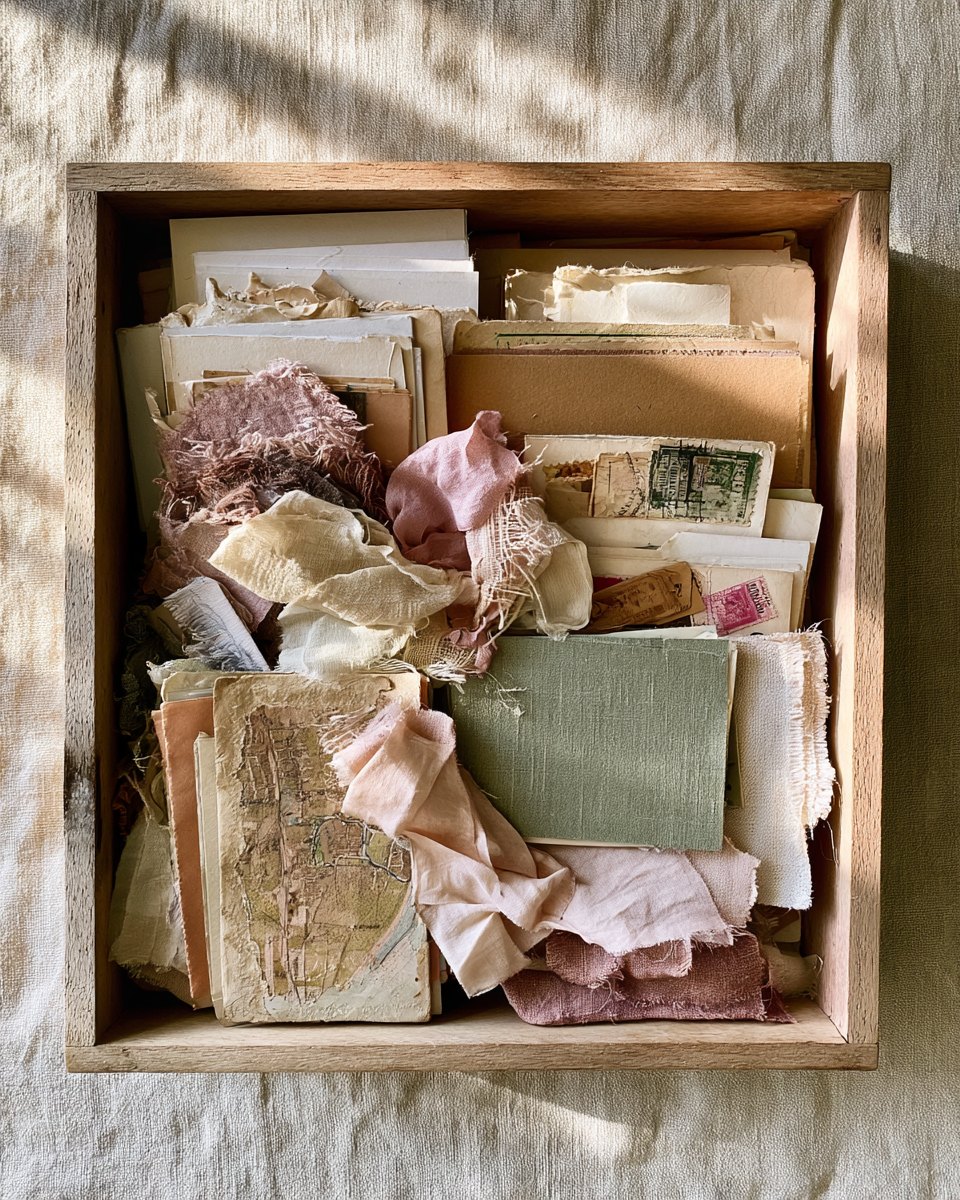
Junk journal ideas are simple ways to fill the pages of a handmade journal with the paper treasures you already keep: ticket stubs, old letters, recipe cards, pressed leaves, lace and photos. The easiest way to start is to pick one small theme for a spread, add one focal piece, and build a few layers around it.
Below are 50 junk journal ideas we actually use, sorted into page ideas, interactive elements, themes, techniques and things to put inside, plus 20 writing prompts for the days your mind goes blank. Every idea comes with a quick “how to” so you can make it tonight with a glue stick and a pile of scraps.
Junk Journal Page and Spread Ideas
A “spread” is the two pages you see when the journal lies open. Thinking in spreads instead of single pages makes everything easier: one side can hold the big picture, the other side the small details and your words. Start with any of these 15 spread ideas.
1. A Seasonal Mood Board
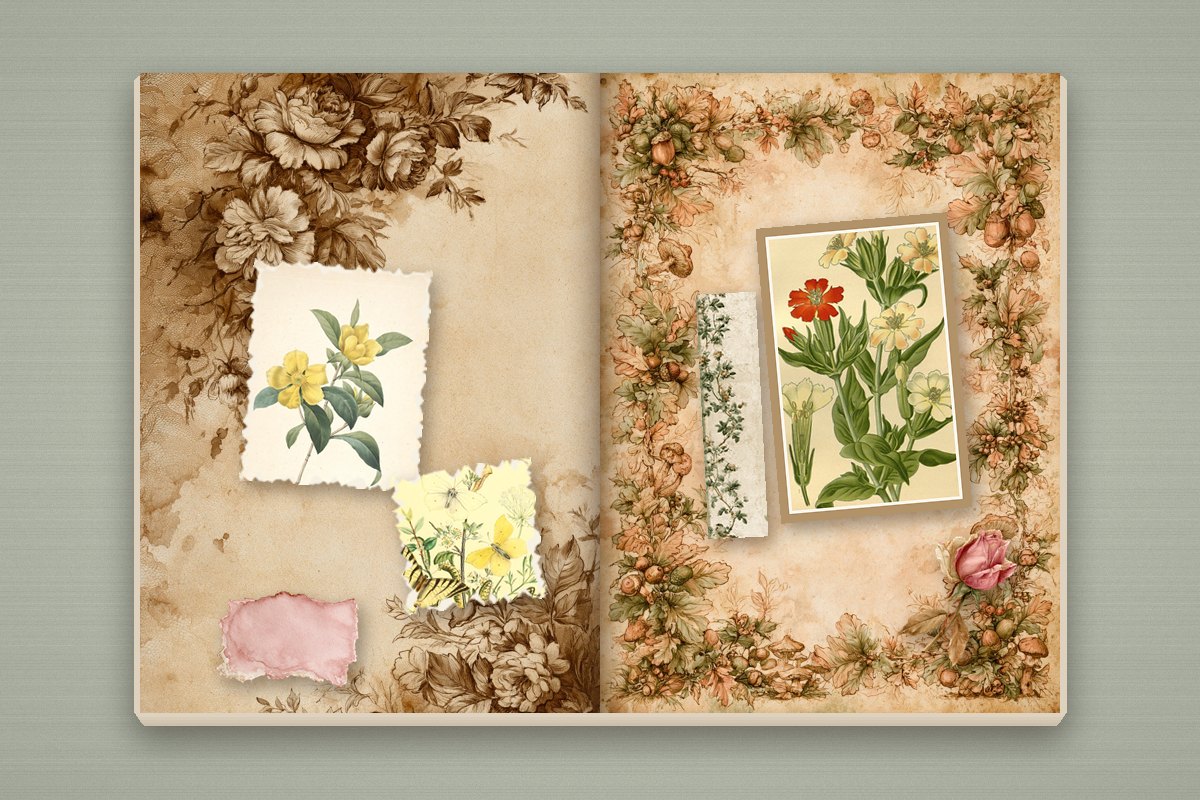
Gather everything that feels like the season right now: a botanical print, a scrap of fabric in the right color, a butterfly, a bit of ribbon. Glue the largest piece first, then cluster the small ones around it so they overlap a little. A mood board is the best first spread for beginners because there is no story to tell, only a feeling to collect.
2. A “Little Joys” Page
Keep a small envelope in your purse for one week and drop in anything tied to a good moment: the tea tag from a slow Sunday, a sticker from the farmers market, a fortune cookie slip. At the end of the week, glue them all onto one page and write one line next to each. It turns an ordinary week into something you will want to reread.
3. An Envelope of Memories
Some keepsakes are too precious or too bulky to glue flat. Glue an envelope to the page instead, write the date and the occasion on the front, and tuck the small things inside: a birthday card, a lock of hair from a first haircut, a handwritten note. The page stays flat and the memories stay safe.
4. A Vintage Recipe Card Page
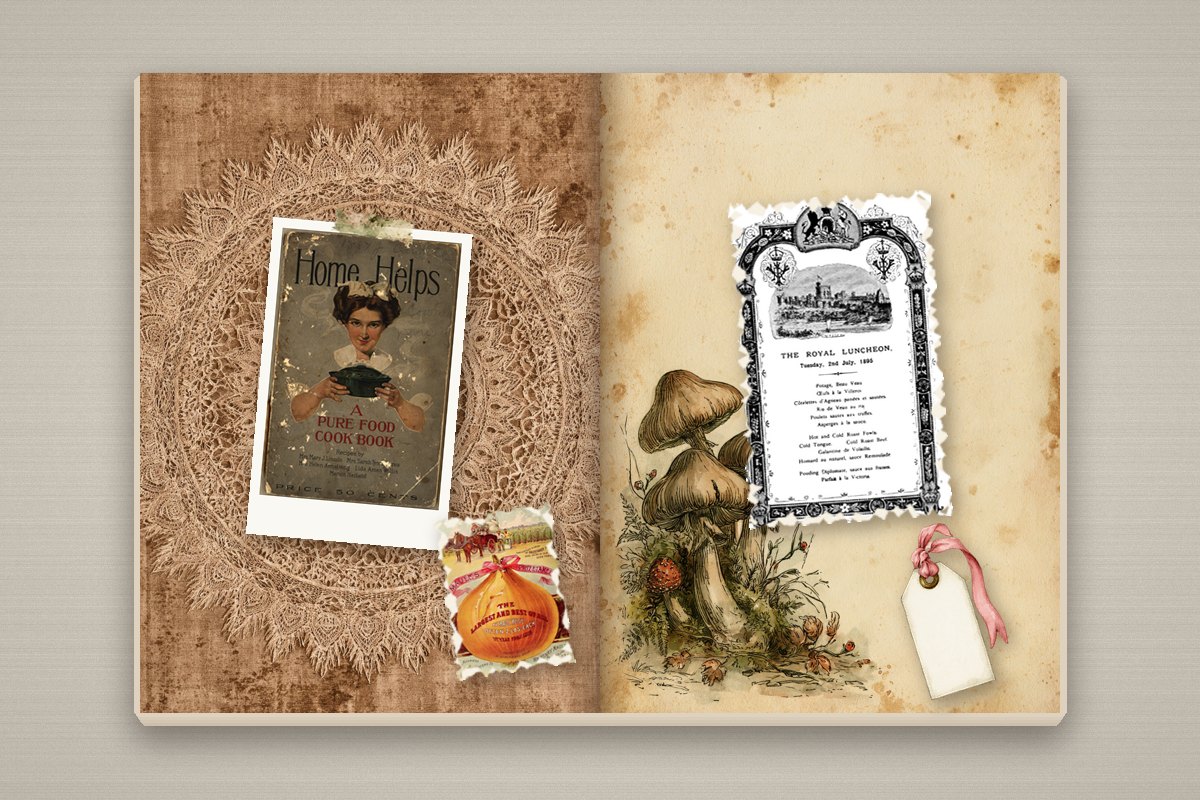
This one is our favorite at Cozy Grandma. Copy a family recipe onto a card in your own handwriting, or use a photocopy of Grandma’s original card. Add an old cookbook cover, a seed packet or a menu, and a tag with the name of the person who always made the dish. A few recipe spreads in a row slowly become a handmade family cookbook.
5. A Letter to Your Future Self
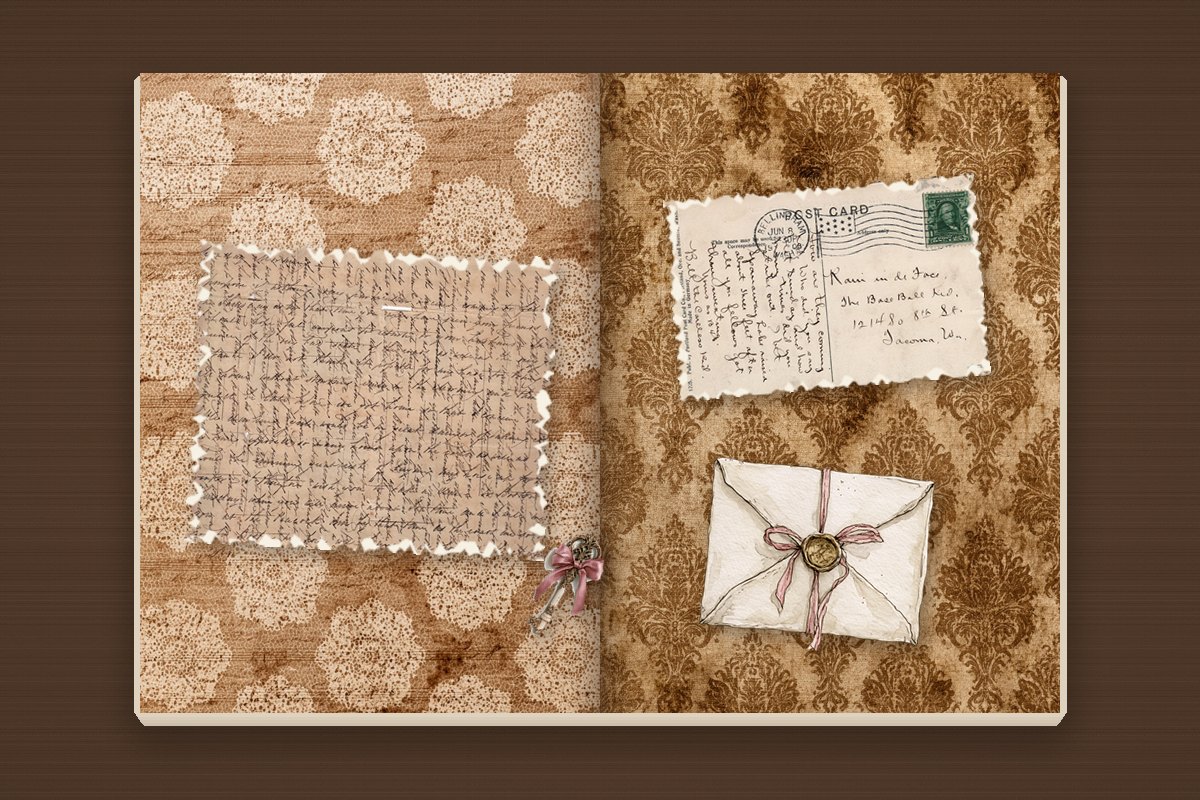
Write a short letter to yourself one year from now: what worries you, what you hope for, what you are proud of. Fold it, seal it in an envelope and glue the envelope on the page with “Open on” and a date. Surround it with an old postcard or a scrap of handwriting so the page looks lovely even while the letter stays closed.
6. A Ticket Stub Travel Page
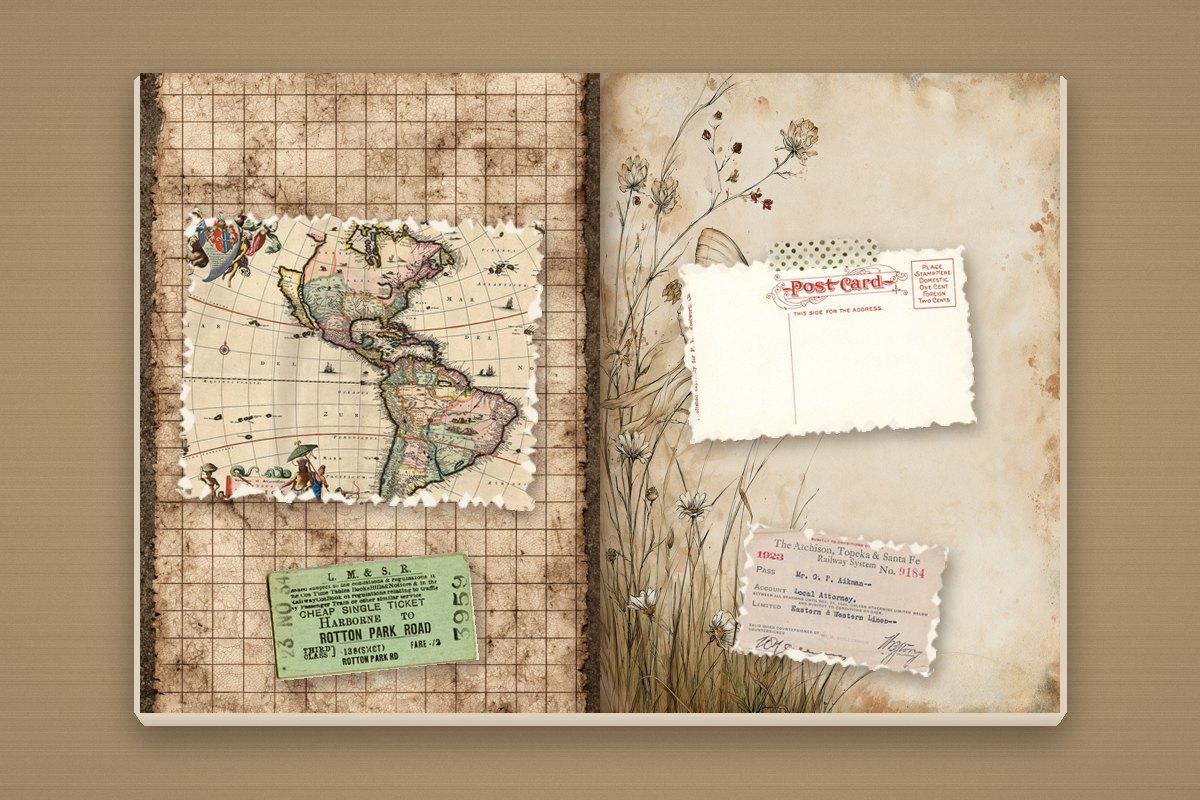
Train tickets, museum passes, boarding passes and parking stubs are small, flat and full of dates, which makes them perfect journal pieces. Arrange them in a loose column, slightly tilted, and write where you went and who was with you along the side. Even a day trip two towns over deserves a page.
7. A Map Spread
Tear a piece of an old road map, a subway map or a printed antique map and use it as the background for a whole spread. Circle a place that matters to you: where you grew up, where you met your partner, where you want to go next. Maps add color and texture without any extra work.
8. A Pressed Flower Page
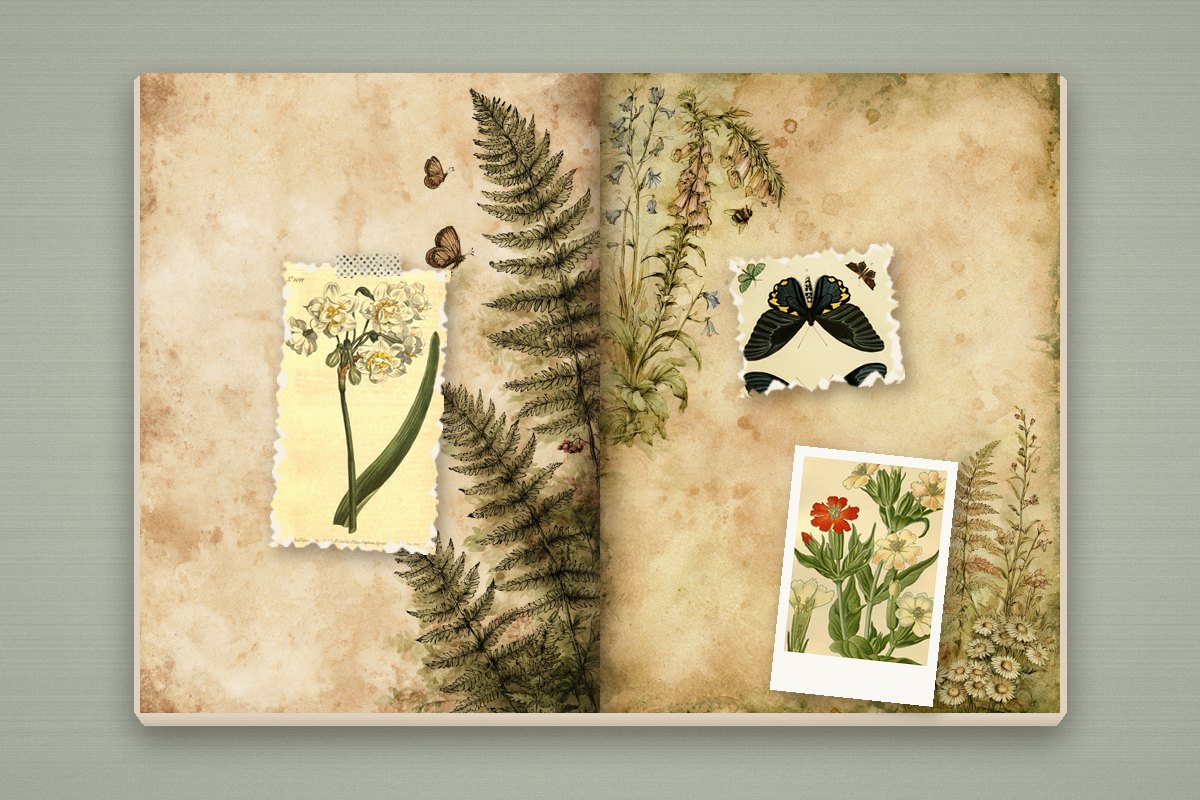
Press flowers or leaves between the pages of a heavy book under a stack of books for one to two weeks. Glue them with a thin layer of matte glue, or hold them under strips of washi tape so they can move a little. Write the date and where you picked them, just like an old botanist’s notebook.
9. An “Imaginary Ancestor” Portrait Page
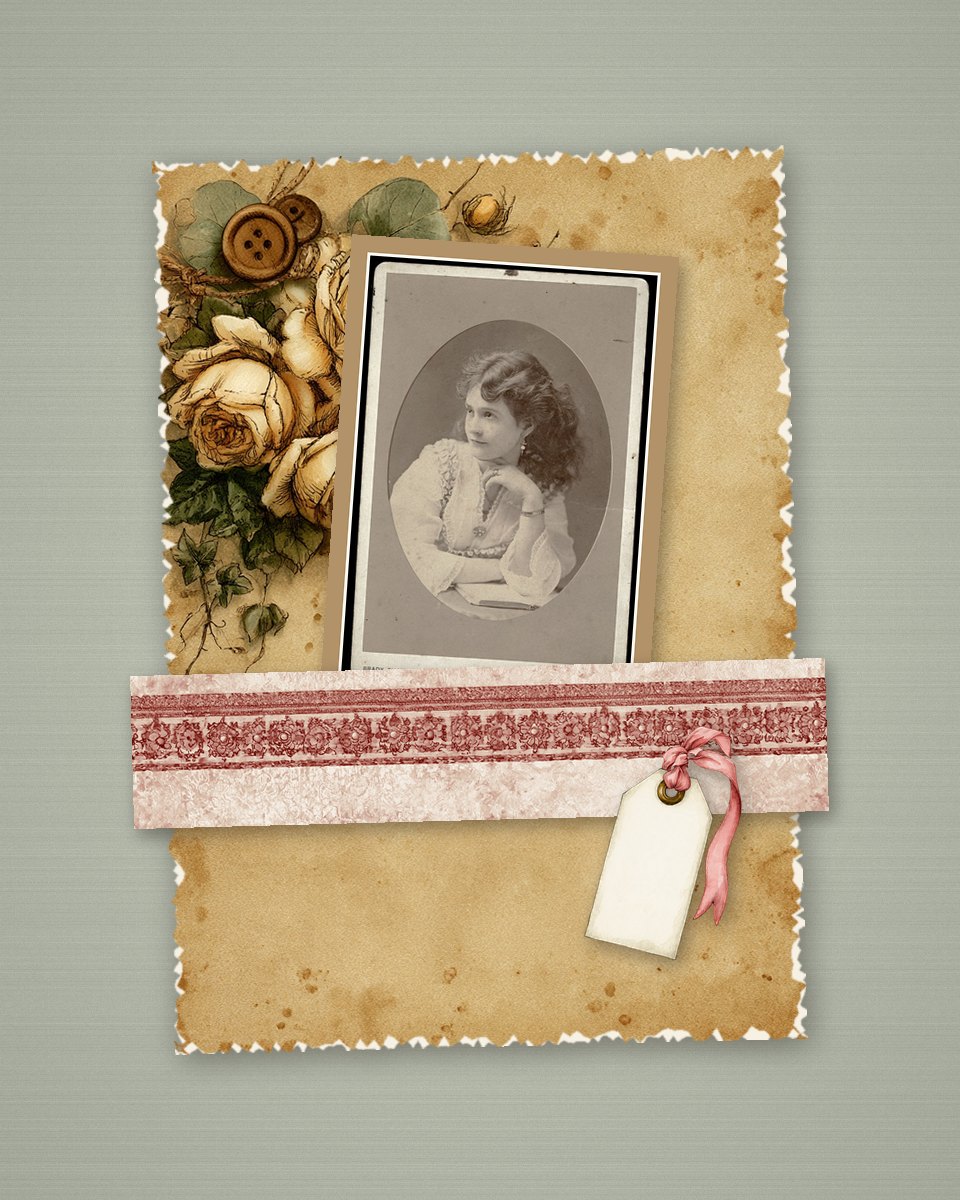
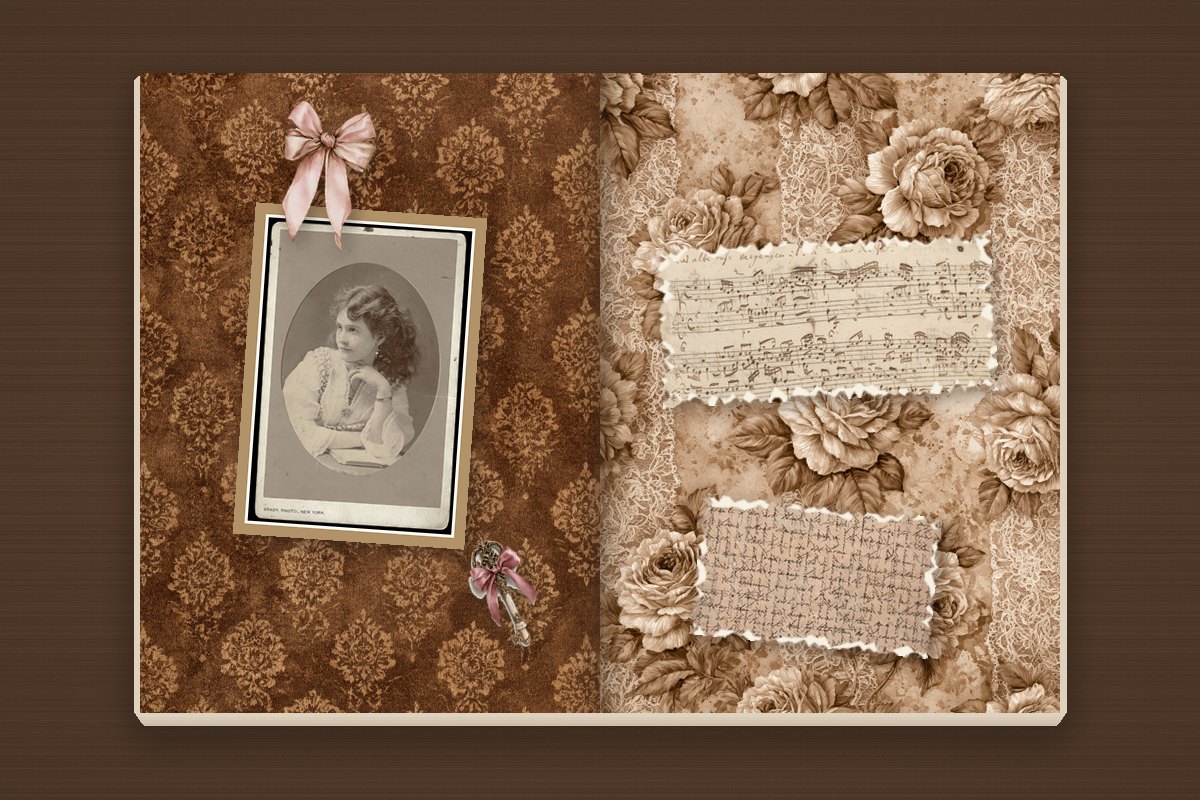
Old cabinet cards and studio portraits from the 1800s are easy to find as free public domain scans. Print one, give her a name, and write a little story about her life. If you have real family photos, use copies instead, never the originals, and add what you know about that person.
10. A Color Palette Page
Pick three or four colors from something you love, like a favorite mug, a quilt or a sunset photo. Collect paint chips, fabric scraps and paper bits in only those colors and arrange them in blocks. It is a calm, almost meditative page, and it teaches you which colors you naturally reach for.
11. A Gratitude Tag Page
Glue a pocket to the page and fill it with small paper tags. Each evening for a week, write one thing you are grateful for on a tag and slip it in. Tags are less scary than a blank page, and pulling them out later feels like opening little presents.
12. Blackout Poetry on a Book Page
Take a page from an old paperback, circle a few words that make a sentence you like, then cover the rest with a marker or paint. The words that remain become your own short poem. Glue the page in and add a flower or a stamp in the corner.
13. A Grocery List and Receipt Page
It sounds boring, but it becomes treasure. A handwritten grocery list, the receipt from your first apartment’s first shopping trip, the price of eggs this year: in ten years these details tell a real story. Tape them down so the thermal paper does not get wet with glue, since it fades faster when it does.
14. A One-Line-a-Day Calendar Page
Draw a simple grid of 30 or 31 boxes, or glue in a page from an old calendar. Write one short line each day: the weather, a meal, a funny thing someone said. This is a perfect page for busy weeks because it takes less than a minute a day.
15. A Favorite Quote Page
Write a quote that has stayed with you on a strip of paper, a tag or a torn piece of book page, then build a small collage around it. Choose pictures that match the mood of the words. When you reread your journal, the quote pages are often the ones you stop on.
Interactive Junk Journal Elements
Interactive elements are the little things you can open, pull or lift. They are what make people say “oh!” when they flip through your journal, and they give you hidden space for writing. None of them need special tools.
16. Envelope Pockets
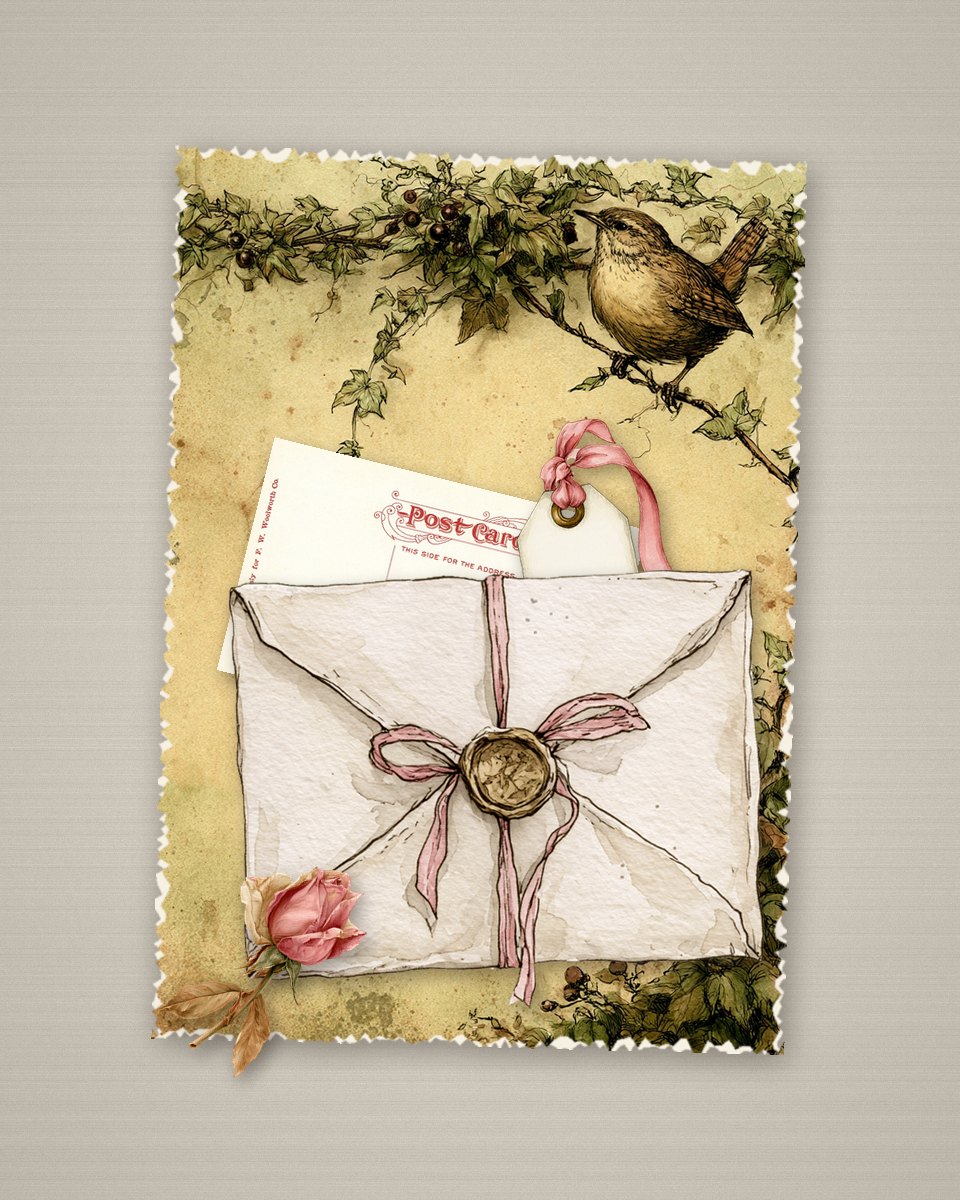
Cut the flap off an old envelope, glue three sides to the page and leave the top open. That is all a pocket is. Use window envelopes, seed envelopes or tiny coin envelopes for variety, and always put something peeking out so the reader knows to look inside.
17. Tuck Spots
A tuck spot is any place where a card can slide in: a strip of paper glued only at its two ends, a diagonal corner, or the gap under a piece of lace. They take ten seconds to make and hold journaling cards, photos and tags without glue.
18. Belly Bands
A belly band is a strip of paper, ribbon or lace that wraps around a single page and is glued together on the back. Slide a tag or a small card under it. It frames the page, adds a strip of pattern and works as a tuck spot all at once.
19. Fold-Out Pages
Glue a sheet that is wider than your journal to the edge of a page and fold it inward. When the reader opens it, the spread suddenly doubles in size. Old sheet music, maps and gift wrap work beautifully because they are already large.
20. Lift-the-Flap Photos
Glue only the top edge of a photo or postcard to the page, then write underneath it. The picture shows the moment and the hidden words tell the story behind it. Add a tiny tab of washi tape on the bottom edge so it is easy to lift.
21. Pull-Tab Tags
Put a tag inside a pocket with a ribbon tied through its hole and hanging out of the top. Pulling the ribbon slides the tag out. Write a longer memory or a list on the tag, front and back.
22. Mini Booklets
Fold three or four small sheets in half, stitch or staple them at the fold and glue the back cover to your page. A mini booklet is perfect for a short trip, a list of favorite books or a child’s drawings.
23. Vellum Windows
Vellum and glassine are see-through papers. Lay a sheet over a pressed flower or a photo and stitch or tape the edges: the picture shows through softly, like a frosted window. You can also write on the vellum itself.
24. Paper Bag Pages
Fold a lunch bag in half and bind it into the journal: the open ends become two ready-made pockets. Paper bag pages are sturdy, cheap and they give the whole book that thick, stuffed look many people love.
25. Hidden Journaling Cards
If you feel shy about writing on a page everyone can see, write on cards and hide them in pockets and tuck spots. Your journal stays pretty on the outside and private on the inside.
 Need pages for pockets and tucks?
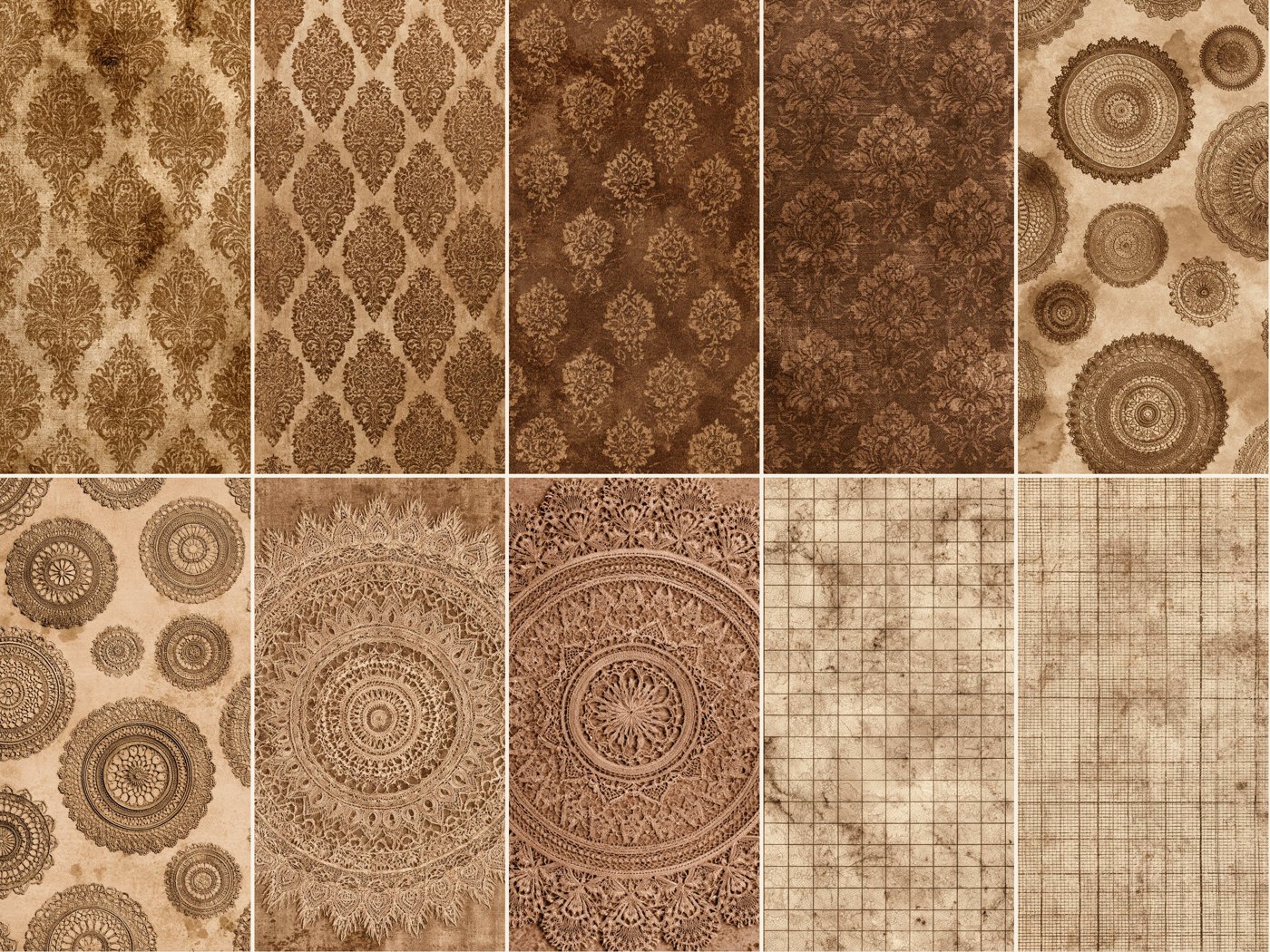
Our Coffee & Lace printable papers are the backgrounds you see in the photos above. Print, tear and fold.
See the kit on Etsy
Need pages for pockets and tucks?
Our Coffee & Lace printable papers are the backgrounds you see in the photos above. Print, tear and fold.
See the kit on Etsy
Junk Journal Theme Ideas
A theme is what ties a whole journal, or one section of it, together. You do not need one to start, but picking a theme makes shopping your scrap pile much faster: you simply pull everything that fits.
26. Vintage Victorian
The classic junk journal look: sepia papers, old portraits, handwritten letters, lace, keys and sheet music. Keep the colors soft and brown, add one touch of dusty pink, and let edges look worn.
27. Cottagecore Kitchen and Recipe Journal
Gingham, recipe cards, tea labels, seed packets and cookbook pages. A kitchen journal mixes pretty pages with useful ones, so you can keep the recipes you love next to the memories of who you cooked them for.
28. Botanical Garden
Old botanical plates are some of the most beautiful free images you can find, since many 1800s magazines are now public domain. Pair them with fern papers, pressed leaves and green washi tape for a calm, garden-fresh journal.
29. Woodland Forest
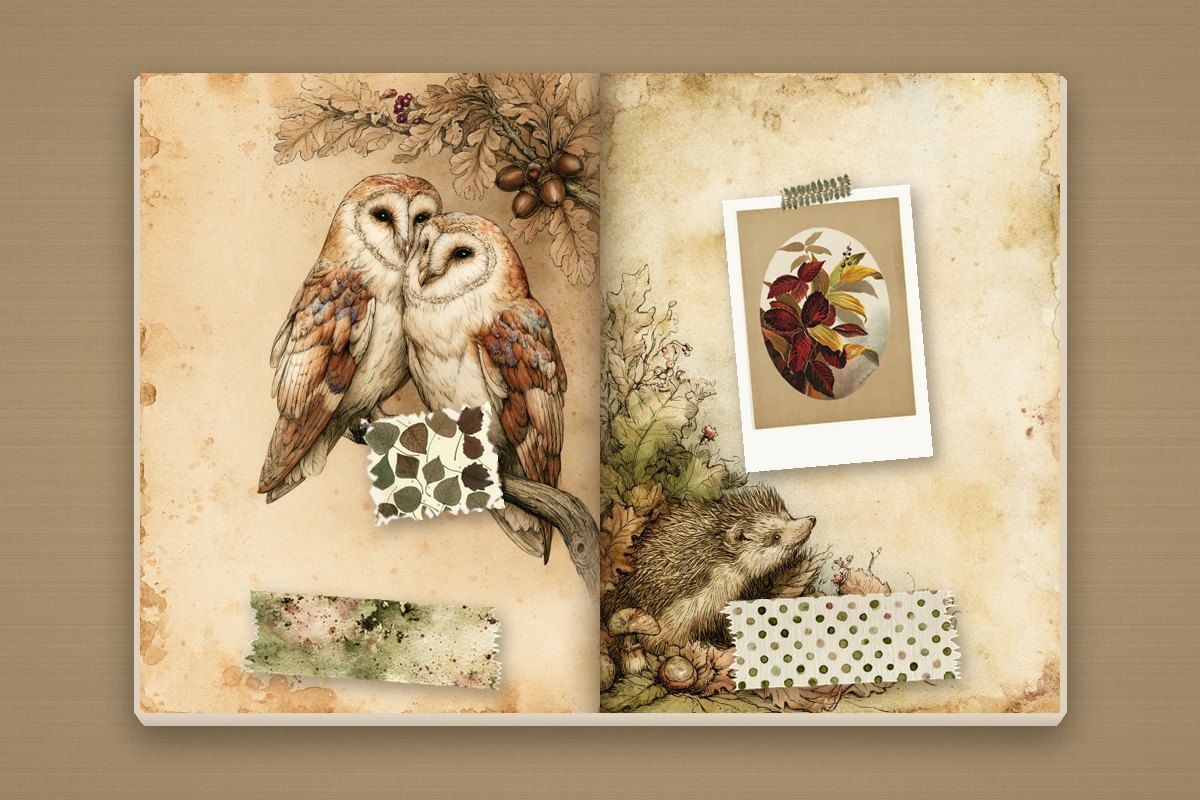
Owls, foxes, hedgehogs, mushrooms and acorns. Woodland journals feel cozy in fall and winter, and they are lovely for nature walks with kids: let them add a leaf or a drawing on each spread.
30. Shabby Chic Blush
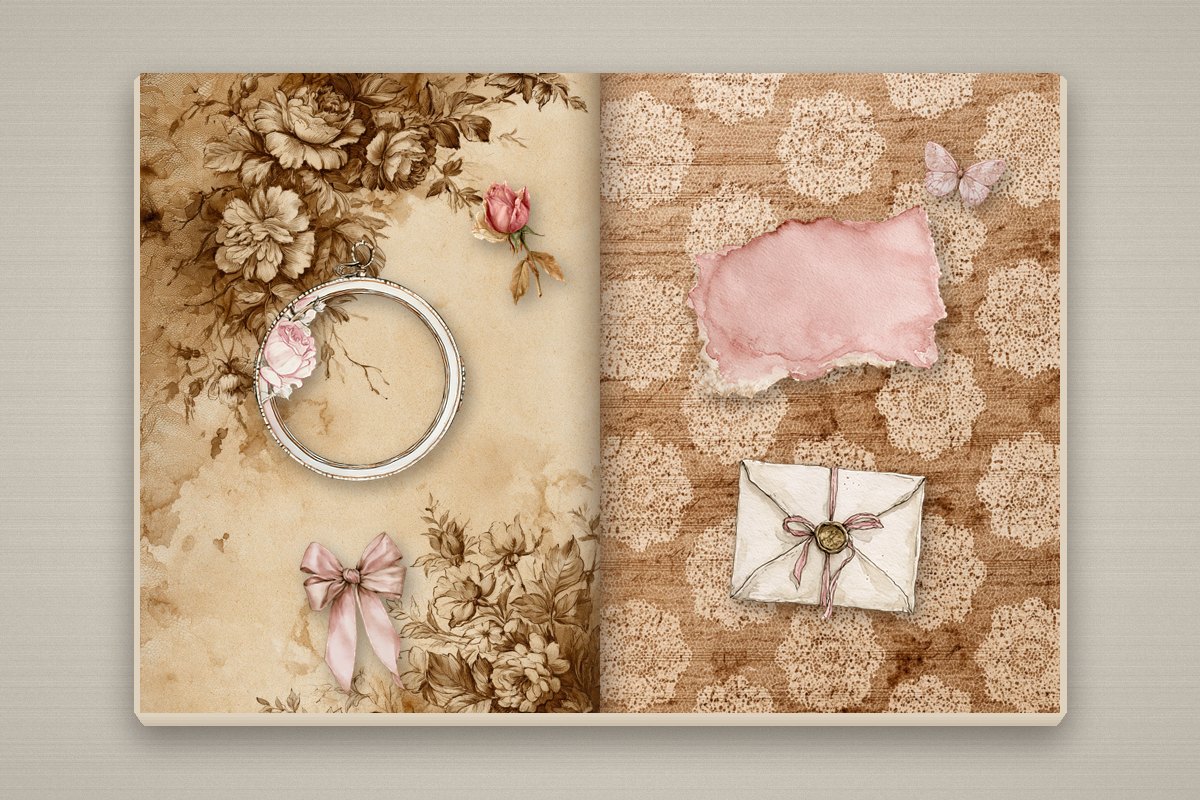
Soft pink, cream and gold: roses, bows, butterflies, little frames and watercolor scraps. Shabby chic pages are very forgiving, because a crooked bow or a coffee ring only adds to the charm.
31. Fall Harvest
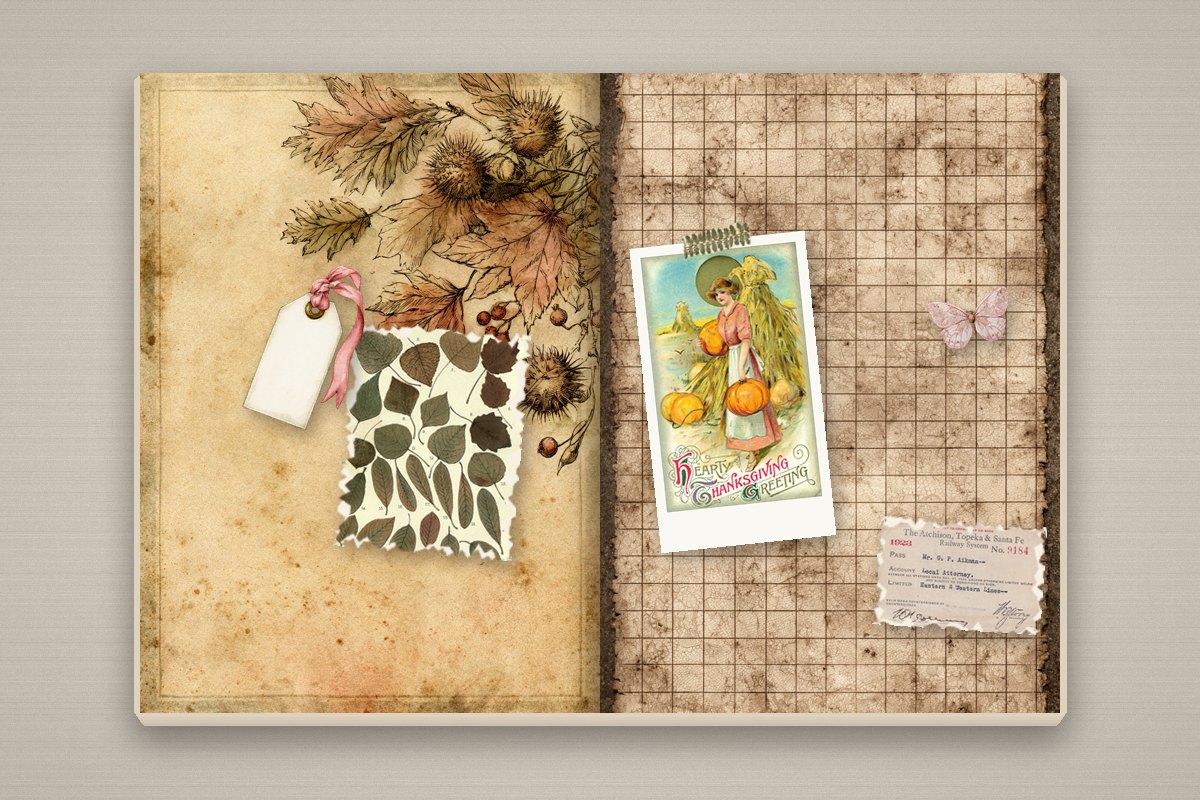
Pumpkins, wheat, apples and falling leaves, in rust, mustard and deep brown. Fall is the most popular season for junk journals, so start your autumn pages early. Old Thanksgiving postcards from the early 1900s are free to use and look wonderful in a polaroid frame, like the one in our cover photo.
32. Christmas Journal
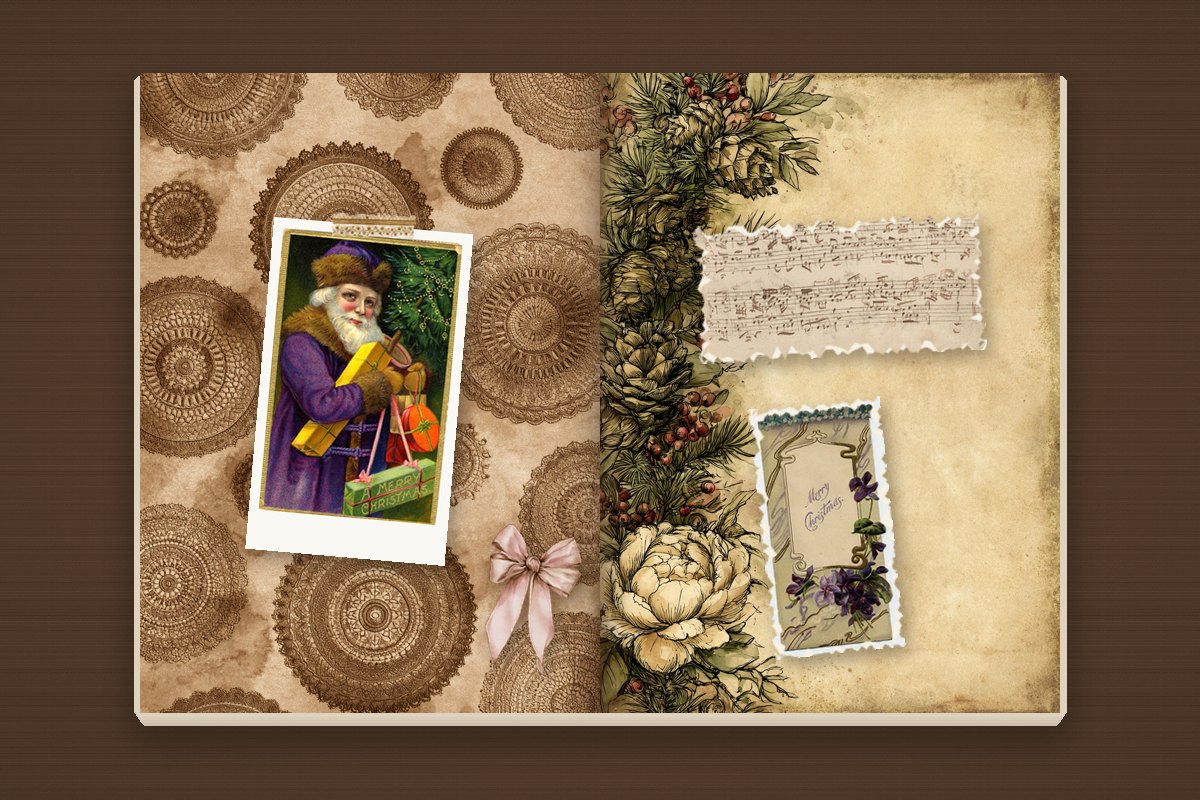
Keep one journal just for the holidays and add a spread every December: the cards you received, the menu, a list of gifts, a photo by the tree. In a few years it becomes the book everyone asks to look at.
33. Travel Journal
Bring a small journal, a glue stick and a pen on your next trip and fill one spread per day with the day’s tickets, receipts and a short note. You will come home with a finished book instead of a bag of paper to sort.
34. Music and Literary
Sheet music, dictionary pages, poetry and old book covers. A literary journal is a lovely place to keep quotes from the books you read this year, with a small review of each one.
35. Butterfly and Nature Study
Inspired by old naturalists’ notebooks: butterflies, moths, bird feathers and labeled specimens. Add tiny handwritten labels like “Seen in the garden, June 12” to make it feel like a real field journal.
36. Seed Catalog Garden Planner
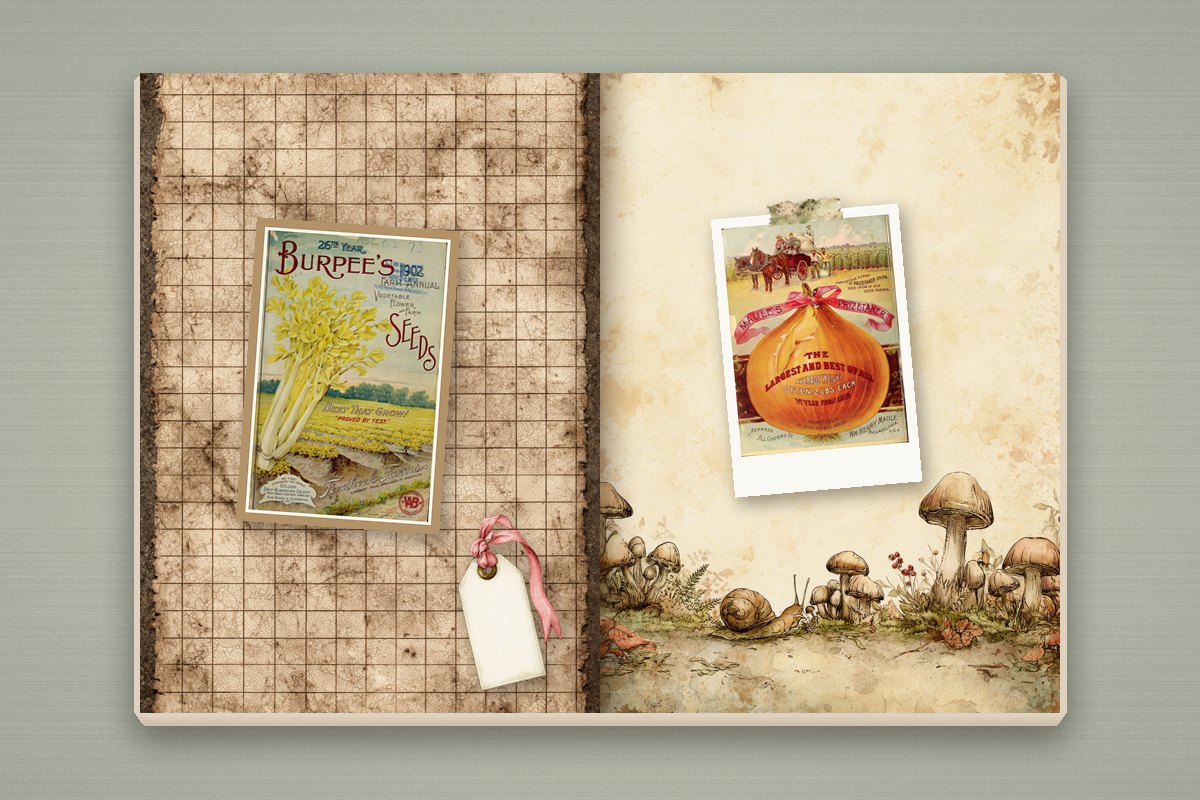
Antique seed catalogs have the brightest covers you will ever find. Use them in a journal that is half pretty, half practical: what you planted, when it came up, what you will try next spring.
37. Family History
Copies of old family photos, a simple family tree, recipes, and the stories older relatives tell at dinner. Ask one question per visit and write the answer down. This might be the most precious journal you ever make.
Junk Journal Techniques That Make Pages Look Vintage
These techniques turn plain paper into pages that look like they were found in an attic. Try one at a time and keep the ones you enjoy.
38. Coffee or Tea Staining
Brew strong coffee or black tea and let it cool. Dip the paper, or brush the liquid on with a sponge, then let it dry flat or hang it on a line. For darker spots, sprinkle a few instant coffee granules on the wet page. Dry pages under a heavy book overnight so they flatten.
39. Torn and Distressed Edges
Tear paper toward you instead of cutting it, so a soft white fiber edge shows. Rub the edges with a fingernail or the back of scissors to fray them. Torn edges instantly make a printed image look like a real piece of old paper.
40. Layering
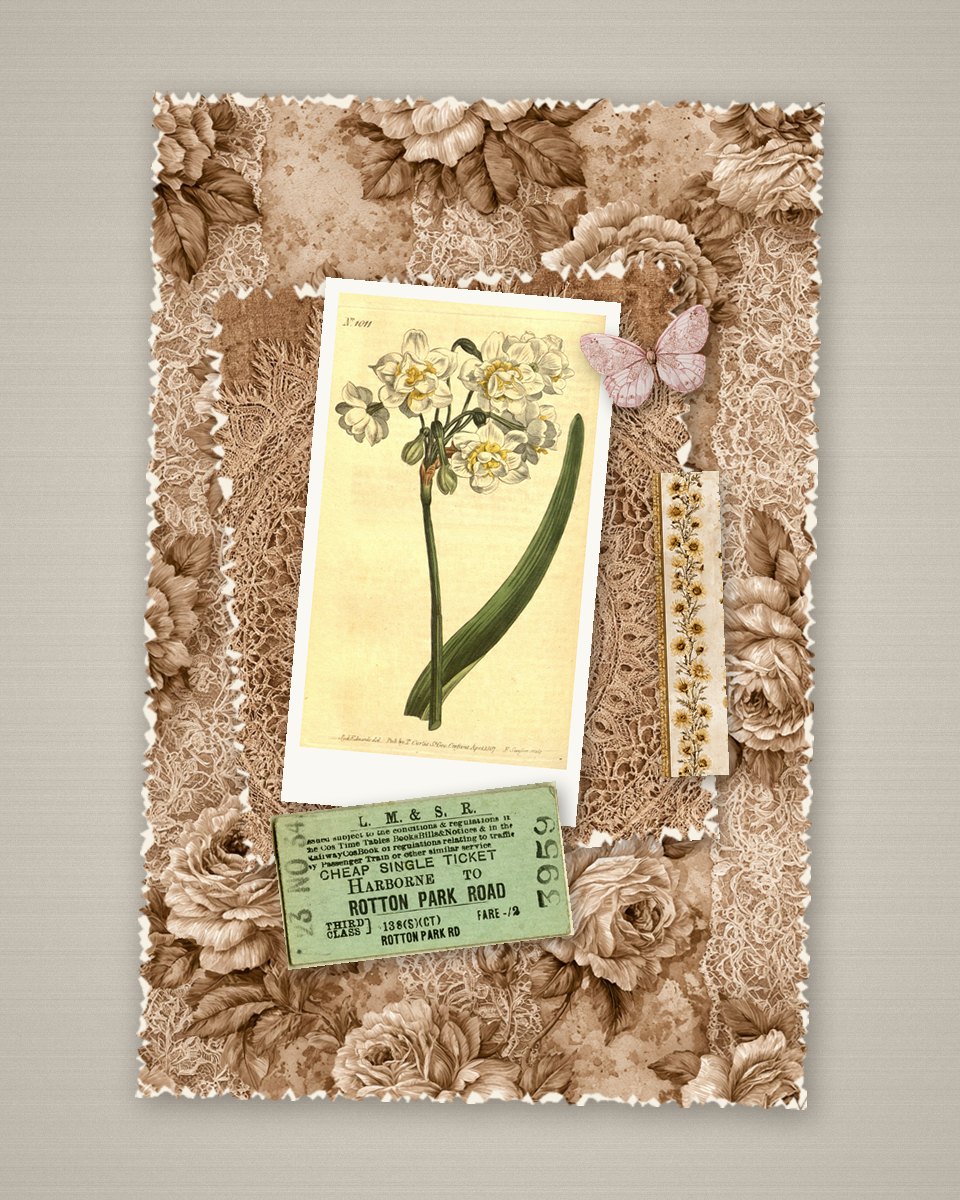
Layering is the heart of junk journaling. Build from the biggest piece to the smallest: a background paper, then a smaller paper or doily, then your focal image, then small bits like a ticket, a tag and a strip of lace. Let each layer peek out from under the next one.
41. Ink Edging
Swipe a brown or black ink pad, or a make-up sponge dabbed in ink, lightly along every edge of a paper piece. The edges darken, the piece separates from the background, and the page suddenly looks finished.
42. Hand Stitching
A simple running stitch around a photo or along the edge of a page adds texture and holds pieces without glue. Pierce the holes first with a pushpin, then sew with embroidery floss or baker’s twine.
43. Doilies and Lace
Paper doilies are cheap and add an instant vintage feel. Tea-stain them, cut them in half, or use real lace scraps from old clothes. Lace under a photo works like a soft frame.
44. Stamping and Washi Tape
A few rubber stamps (a postmark, a date, a little flower) and three or four rolls of washi tape go a long way. Stamp in a light color over backgrounds so the pattern stays subtle, and use tape to hold pieces you may want to move later.
45. Fussy Cutting
Fussy cutting means cutting carefully around a single motif, like one flower from a patterned napkin or one bird from a page. These cut-outs can sit on top of everything else and tie the page together.
 Love the woodland pages?
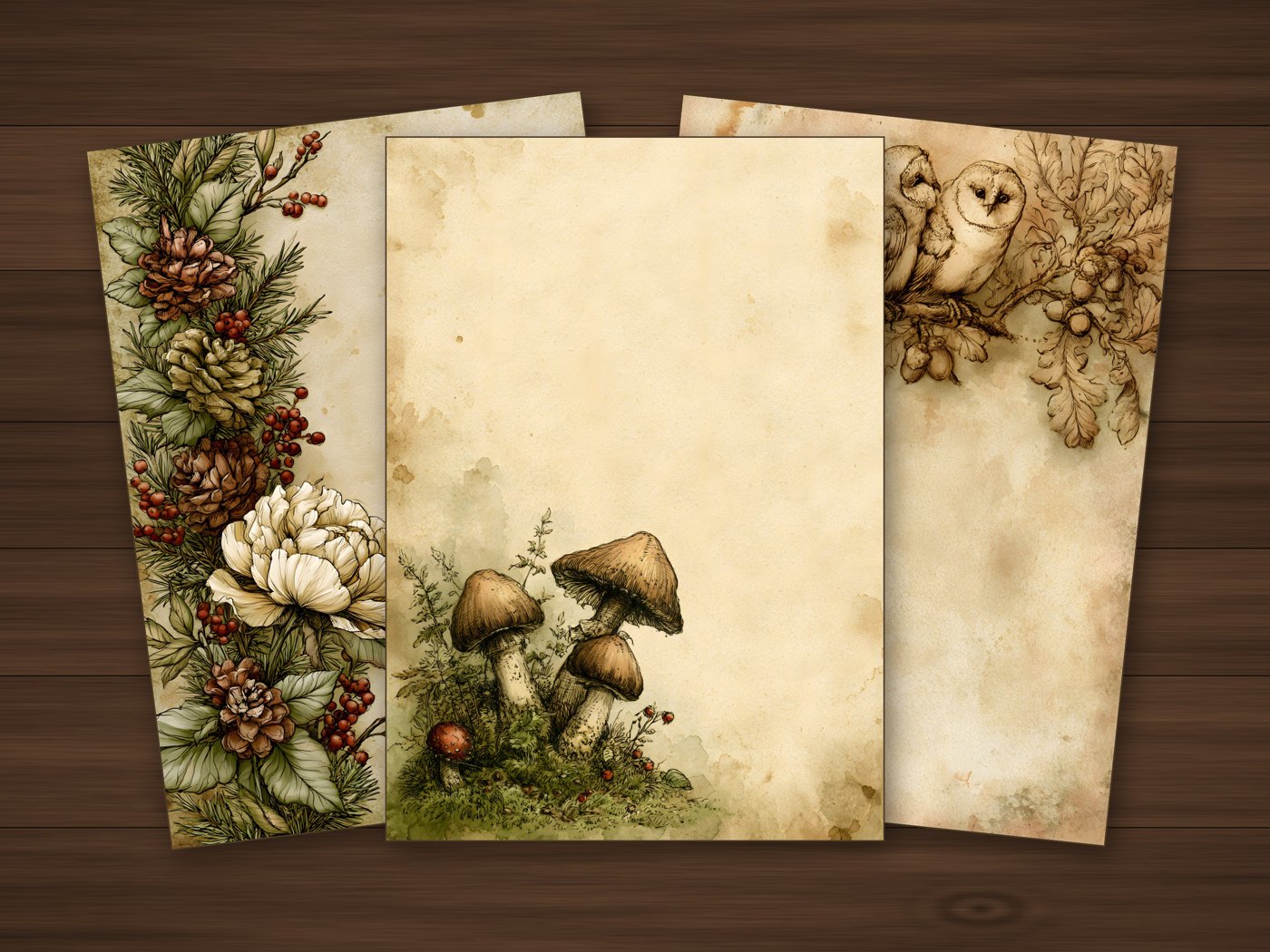
The owl, hedgehog and fern pages in our photos are from our 20-page Woodland kit, ready to print at home.
See the kit on Etsy
Love the woodland pages?
The owl, hedgehog and fern pages in our photos are from our 20-page Woodland kit, ready to print at home.
See the kit on Etsy
What to Put in a Junk Journal
The best junk journal supplies are free. Here is where we find them, and a few safe places to download vintage images legally.
46. Free Public Domain Ephemera
Many museums and libraries share old postcards, seed catalogs, botanical plates and letters for free. Look for a “public domain” or “no known copyright restrictions” label on each item before you print it. Good places to start are Wikimedia Commons, the Library of Congress Free to Use collection, Smithsonian Open Access, the NYPL Digital Collections and the Biodiversity Heritage Library for botanicals. Every vintage piece in the photos on this page comes from public domain scans like these.
47. Kitchen Ephemera
Tea bag tags and wrappers, pretty food labels, coffee bags, bakery string, recipe cards and the paper doilies under cakes. The kitchen is a gold mine, and these pieces fit perfectly in a recipe journal.
48. Mail and Packaging
Envelopes with interesting stamps, the inside of security envelopes (they have lovely patterns), shipping tags, tissue paper and pretty boxes. Cut the patterned panels out of cereal and tea boxes to use as sturdy covers.
49. Fabric, Ribbon and Trims
Lace from old blouses, buttons, ribbon from gifts, scraps of quilting cotton and bits of burlap. Fabric adds a soft texture paper cannot, and it is a sweet way to keep a piece of a favorite old dress.
50. Natural Finds
Pressed flowers and leaves, feathers, thin slices of birch bark and seed pods. Make sure everything is completely dry before it goes in the journal, and keep thicker items in pockets so the book still closes.
20 Junk Journal Prompts for When You Feel Stuck
Some days the paper is ready but the words are not. Pick one of these prompts, write two or three lines on a tag or a card, and build the page around it.
- The smell that always reminds me of home is…
- A recipe I wish I had asked someone to teach me.
- Three small things that made me smile this week.
- The view from my kitchen window today.
- What my grandmother (or an older friend) taught me without saying it.
- My favorite season, and the exact moment it starts for me.
- A place I want to visit before I turn a year older.
- The book I would save from a fire.
- A letter to the person I was ten years ago.
- Everything I ate on a perfect day.
- A song that takes me straight back to one summer.
- What is growing in my garden, or on my windowsill, right now.
- A tradition I want to keep, and one I want to start.
- The kindest thing a stranger ever did for me.
- My dream cozy evening, from start to finish.
- A story my family tells every holiday.
- Five words for how this month felt.
- Something I made with my hands that I am proud of.
- What I would put in a time capsule this year.
- A list of things I no longer worry about.
Brand new to junk journaling? Start with our 10 junk journal rules for beginners. It covers what to collect first, how to layer your first pages and how to find your style, and it comes with a free printable starter checklist.
 Want the blush roses and bows?
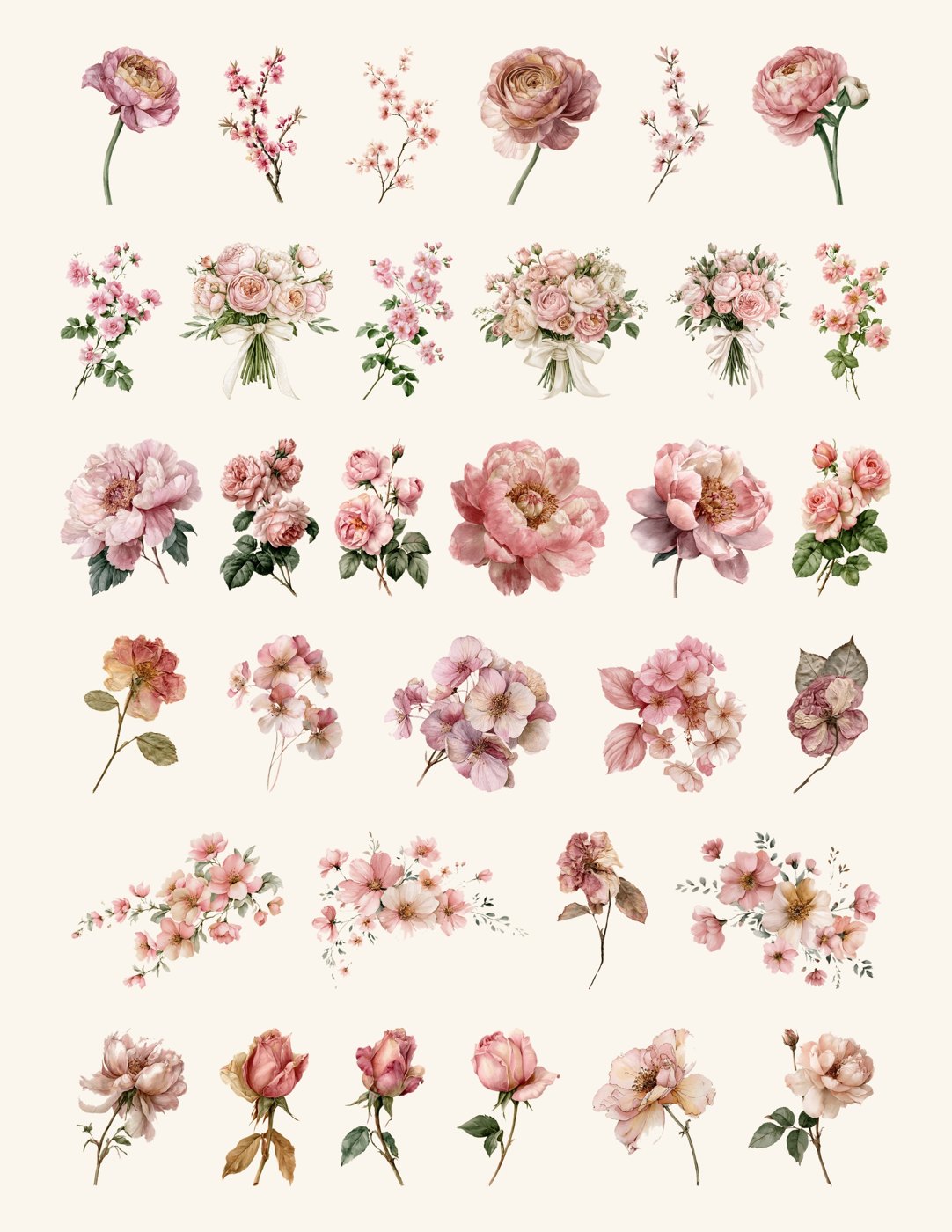
The pink frames, bows, tags and butterflies in our shabby chic photos are printable ephemera from our shop.
Visit the shop on Etsy
Want the blush roses and bows?
The pink frames, bows, tags and butterflies in our shabby chic photos are printable ephemera from our shop.
Visit the shop on Etsy
Junk Journal Ideas FAQ
What do you put in a junk journal?
Anything flat that carries a memory or a feeling: ticket stubs, receipts, postcards, letters, recipe cards, photos, book pages, tea tags, fabric, lace, pressed flowers and printed vintage ephemera. Bulky or precious items go into envelopes and pockets instead of being glued down.
How do I start my first junk journal page?
Choose one background paper, one focal piece (a photo or a postcard) and two or three small extras. Glue the background, place the focal piece slightly off-center, add the extras so they overlap it a little, and write one line about why you chose them. That is a finished page.
What is the difference between a junk journal and a scrapbook?
A scrapbook usually follows neat layouts around photos and uses new, matching supplies. A junk journal is looser: it is often handmade from recycled paper, mixes old and new pieces, and is full of pockets, tags and layers. Imperfection is part of the style.
What glue is best for junk journals?
A strong glue stick works for most paper. Use a matte liquid glue or double-sided tape for heavier pieces like cardstock and fabric, and tape (not glue) for receipts printed on thermal paper. Always let pages dry under a heavy book so they do not wrinkle.
Can I use images I find online in my junk journal?
For a private journal, most people print what they love. If you plan to share or sell your pages, use images marked public domain or CC0, or printables that you bought with a license that allows it. Museum and library collections such as the Library of Congress and Smithsonian Open Access are safe places to start.
How many pages should a junk journal have?
There is no rule. A first journal of 20 to 40 pages (five to ten folded sheets in two or three signatures) is easy to finish and still closes well once you add pockets and layers. You can always make a second one.
Your Journal, Your Way
You do not need to try all 50 junk journal ideas. Pick one spread idea, one theme and one technique, and make a single page this week. The more pages you make, the more your own style shows up, and that is the whole point: a junk journal is a book only you could have made.
Save this list to your Pinterest board so you have it next time you sit down with your scraps, and tell us in the comments which idea you are trying first.
Image notes: the vintage postcards, tickets, letters, maps and botanical plates in our photos are public domain scans from Wikimedia Commons, combined with printable pages from our own shop. Full source list available on request.